Abstract
Abstract Background Brown spot disease is one of the most destructive foliar diseases of rice. Biological control of this disease is considered more environmentally safe, but the biological control agents have limited availability. The fungus Trichoderma can be used as a biocontrol agent for various plant diseases, including brown spots. Indigenous Trichoderma species from West Timor were evaluated in this study to reveal their effectiveness in reducing brown spot disease of upland rice. The study was conducted under a screen house condition using a factorial treatment design laid out in a completely randomized design. The two factors were the brown spot disease control method ( T. viride, T. harzianum, T. hamatum , fungicide Trivia 73 WP, and a control treatment) and upland rice genotype (Inpago 7 and Breun Senaren 2). Results The results showed that Trichoderma spp. and the fungicide Trivia 73 WP caused significantly lower AUDPC and apparent infection rate than the control treatment. The total phenol content and agronomic characters (number of reproductive tillers per plant, number of filled grains per panicle, grain yield per plant) were higher in the Trichoderma and fungicide treatments than the control treatment. Meanwhile, tannin and saponin levels were non-significantly different among treatments. Trichoderma and the fungicide Trivia treatments effectively suppressed brown spot disease of upland rice, and the efficacy was dependent on the rice variety, with a mean efficacy range over the two varieties of 27.05–36.42%. The Trichoderma and the fungicide Trivia treatments increased the grain yield per plant differentially in the 2 rice varieties, with a mean grain yield increase over the 2 varieties of 13.0% ( T. viride ), 23.5% ( T. harzianum ), 35.0% ( T. hamatum ), and 19.9 % (Trivia 73 WP). Conclusion Efficacy of local Trichoderma of West Timor and the fungicide Trivia treatments were varietal dependent with T. hamatum being the most effective in reducing the brown spot disease and producing the highest grain yield increase over the 2 rice varieties. The local Trichoderma species of West Timor have a future potential as biocontrol agents of upland rice brown spot disease, but it is necessary to further evaluate their effectiveness against the disease in replicated field trials.
Abstract from the paper’s OpenAlex record; open copy licensed cc-by. Read at the source ↗
The text the model read, with the source record’s inline markup (italics, sub- and superscripts) rendered and its character entities decoded; quote offsets refer to the raw text.
Claims 10
Claim · model-written summary
Trichoderma and fungicide lowered brown spot disease progress and infection rate versus control.
- Taxon
- upland rice
 Oryza sativat0
- Treatment
- Trichoderma spp. and the fungicide Trivia 73 WPe0
- Interactor
- Trichoderma spp.
 Trichodermae0biocontrol_agent
- Outcome
- AUDPC and apparent infection ratee0
- Direction
- lowere0
- Comparator
- control treatmente0
Organisms pictured · Representative pictures of the matched species, not figures from the paper.


Verbatim
e0“Trichoderma spp. and the fungicide Trivia 73 WP caused significantly lower AUDPC and apparent infection rate than the control treatment”
t0“upland rice”
Claim · model-written summary
Phenol content and agronomic traits were higher with Trichoderma and fungicide than control.
- Taxon
- upland riceOryza sativat0
- Treatment
- Trichoderma and fungicide treatmentse0
- Interactor
- TrichodermaTrichodermae0biocontrol_agent
- Outcome
- total phenol content and agronomic characterse0
- Direction
- highere0
- Comparator
- control treatmente0
Organisms pictured · Representative pictures of the matched species, not figures from the paper.
Verbatim
e0“The total phenol content and agronomic characters (number of reproductive tillers per plant, number of filled grains per panicle, grain yield per plant) were higher in the Trichoderma and fungicide treatments than the control treatment”
t0“upland rice”
Claim · model-written summary
Tannin and saponin levels did not differ significantly among treatments.
- Taxon
- upland riceOryza sativat0
- Treatment
- treatmentse0
- Outcome
- tannin and saponin levelse0
- Direction
- non-significantly differente0
- Comparator
- among treatmentse0
Organisms pictured · Representative pictures of the matched species, not figures from the paper.
Verbatim
e0“tannin and saponin levels were non-significantly different among treatments”
t0“upland rice”
Claim · model-written summary
Brown spot suppression efficacy varied by rice variety, averaging 27.05–36.42%.
- Taxon
- upland riceOryza sativat0
- Outcome
- efficacye0
- Value
- 27.05–36.42%e0
- Qualifier
- dependent on the rice varietye0
Organisms pictured · Representative pictures of the matched species, not figures from the paper.
Verbatim
e0“efficacy was dependent on the rice variety, with a mean efficacy range over the two varieties of 27.05–36.42%”
t0“upland rice”
Claim · model-written summary
T. viride increased mean grain yield per plant by 13.0%.
- Taxon
- upland riceOryza sativat0
- Treatment
- T. viridee0
- Interactor
- T. viride
 Trichoderma viridee0biocontrol_agent
- Outcome
- grain yielde0
- Direction
- increasee0
- Value
- 13.0%e0
Not reportedComparator
Organisms pictured · Representative pictures of the matched species, not figures from the paper.

Verbatim
e0“mean grain yield increase over the 2 varieties of 13.0% ( T. viride )”
t0“upland rice”
Claim · model-written summary
T. harzianum increased mean grain yield per plant by 23.5%.
- Taxon
- upland riceOryza sativat0
- Treatment
- T. harzianume0
- Interactor
- T. harzianumTrichoderma harzianume0biocontrol_agent
- Outcome
- grain yielde0
- Direction
- increasee0
- Value
- 23.5%e0
Not reportedComparator
Organisms pictured · Representative pictures of the matched species, not figures from the paper.
Verbatim
e0“mean grain yield increase over the 2 varieties of 13.0% ( T. viride ), 23.5% ( T. harzianum )”
t0“upland rice”
Claim · model-written summary
T. hamatum increased mean grain yield per plant by 35.0%.
- Taxon
- upland riceOryza sativat0
- Treatment
- T. hamatume0
- Interactor
- T. hamatum
 Trichoderma hamatume0biocontrol_agent
- Outcome
- grain yielde0
- Direction
- increasee0
- Value
- 35.0%e0
Not reportedComparator
Organisms pictured · Representative pictures of the matched species, not figures from the paper.
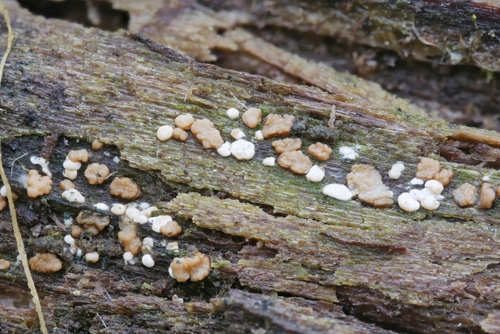
Verbatim
e0“mean grain yield increase over the 2 varieties of 13.0% ( T. viride ), 23.5% ( T. harzianum ), 35.0% ( T. hamatum )”
t0“upland rice”
Claim · model-written summary
Trivia 73 WP increased mean grain yield per plant by 19.9%.
- Taxon
- upland riceOryza sativat0
- Treatment
- Trivia 73 WPe0
- Outcome
- grain yielde0
- Direction
- increasee0
- Value
- 19.9 %e0
Not reportedComparator
Organisms pictured · Representative pictures of the matched species, not figures from the paper.
Verbatim
e0“mean grain yield increase over the 2 varieties of 13.0% ( T. viride ), 23.5% ( T. harzianum ), 35.0% ( T. hamatum ), and 19.9 % (Trivia 73 WP)”
t0“upland rice”
Claim · model-written summary
T. hamatum was most effective for brown spot reduction and yield increase.
- Taxon
- upland riceOryza sativat0
- Interactor
- T. hamatumTrichoderma hamatume0biocontrol_agent
- Outcome
- brown spot disease and producing the highest grain yield increasee0
- Direction
- most effectivee0
Organisms pictured · Representative pictures of the matched species, not figures from the paper.
Verbatim
e0“T. hamatum being the most effective in reducing the brown spot disease and producing the highest grain yield increase over the 2 rice varieties”
t0“upland rice”
Claim · model-written summary
The authors recommend replicated field trials of local Trichoderma against rice brown spot.
- Taxon
- upland riceOryza sativat0
- Outcome
- further evaluate their effectiveness against the disease in replicated field trialse0
Organisms pictured · Representative pictures of the matched species, not figures from the paper.
Verbatim
e0“necessary to further evaluate their effectiveness against the disease in replicated field trials”
t0“upland rice”
The same questions in other papers
Trichoderma viride · yield · Oryza sativa (rice)Positive and negative results
6 papers in the same direction as this paper · 1 in the opposite direction
- negative
- positive
- positive
4 papers more in this group
See all 8 papers →Trichoderma hamatum · yield · Oryza sativa (rice)Results agree
2 papers in the same direction as this paper
- positive
- positive
Trichoderma harzianum · yield · Oryza sativa (rice)Results agree
13 papers in the same direction as this paper
- positive
- positive
- positive
10 papers more in this group
See all 14 papers →Trichoderma · disease · Oryza sativa (rice)Results agree
14 papers in the same direction as this paper
- positive
- positive
- positive
11 papers more in this group
See all 15 papers →fungicide · disease · Oryza sativa (rice)Positive and negative results
50 papers in the same direction as this paper · 2 in the opposite direction
- negative
- no effect
- positive
49 papers more in this group
See all 53 papers →Claims are grouped by organism, treatment and what was measured or targeted. A paper counts as positive when any of its claims in the group is positive.