Abstract
The growth-promoting hormones brassinosteroids (BRs) and their key signaling component BZR1 play a vital role in balancing normal growth and defense reactions. Here, we discovered that BRs and OsBZR1 upregulated sakuranetin accumulation and conferred basal defense against Magnaporthe oryzae infection under normal conditions. Resource shortages, including phosphate (Pi) deficiency, potentially disrupt this growth-defense balance. OsSPX1 and OsSPX2 have been reported to sense Pi concentration and interact with the Pi signal mediator OsPHR2, thus regulating Pi starvation responses. In this study, we discovered that OsSPX1/2 interacts with OsBZR1 in both Pi-sufficient and Pi-deficient conditions, inhibiting BR-responsive genes. When Pi is sufficient, OsSPX1/2 is captured by OsPHR2, enabling most of OsBZR1 to promote plant growth and maintain basal resistance. In response to Pi starvation, more OsSPX1/2 is released from OsPHR2 to inhibit OsBZR1 activity, resulting in slower growth. Collectively, our study reveals that the OsBZR1-SPX1/2 module balances the plant growth-immunity trade-off in response to Pi availability.
Abstract from the paper’s OpenAlex record; open copy licensed cc-by-nc-nd. Read at the source ↗
The text the model read, with the source record’s inline markup (italics, sub- and superscripts) rendered and its character entities decoded; quote offsets refer to the raw text.
Claims 6
Claim · model-written summary
BRs and OsBZR1 upregulated sakuranetin accumulation in rice under normal conditions.
- Taxon
- rice
 Oryza sativat0
- Treatment
- BRs and OsBZR1e0
- Gene
- OsBZR1e0
- Outcome
- sakuranetin accumulatione0
- Direction
- upregulatede0
Not reportedComparator
Organisms pictured · Representative pictures of the matched species, not figures from the paper.

Verbatim
t0“adaptation to phosphate availability in rice”
e0“BRs and OsBZR1 upregulated sakuranetin accumulation and conferred basal defense against Magnaporthe oryzae infection under normal conditions”
Claim · model-written summary
BRs and OsBZR1 conferred basal defense in rice against Magnaporthe oryzae infection under normal conditions.
- Taxon
- riceOryza sativat0
- Treatment
- BRs and OsBZR1e0
- Interactor
- Magnaporthe oryzae
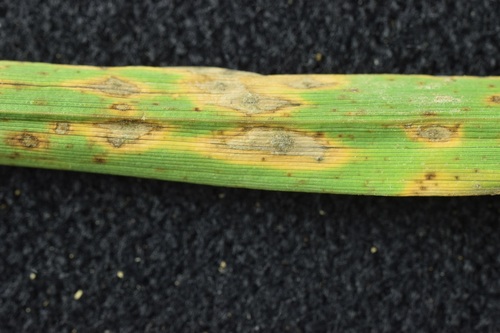
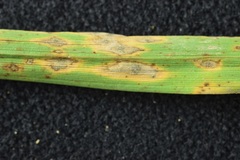 Pyricularia oryzaee0pathogen
- Outcome
- basal defensee0
- Qualifier
- under normal conditionse0
Not reportedComparatorDirection
Organisms pictured · Representative pictures of the matched species, not figures from the paper.
Verbatim
t0“adaptation to phosphate availability in rice”
e0“BRs and OsBZR1 upregulated sakuranetin accumulation and conferred basal defense against Magnaporthe oryzae infection under normal conditions”
Claim · model-written summary
OsSPX1/2 interacts with OsBZR1 in both Pi-sufficient and Pi-deficient rice.
- Taxon
- riceOryza sativat0
- Gene
- OsSPX1/2e1
- Outcome
- interacts with OsBZR1e1
- Qualifier
- in both Pi-sufficient and Pi-deficient conditionse1
Organisms pictured · Representative pictures of the matched species, not figures from the paper.
Verbatim
t0“adaptation to phosphate availability in rice”
e1“OsSPX1/2 interacts with OsBZR1 in both Pi-sufficient and Pi-deficient conditions, inhibiting BR-responsive genes”
Claim · model-written summary
OsSPX1/2 inhibits BR-responsive genes in rice.
- Taxon
- riceOryza sativat0
- Gene
- OsSPX1/2e1
- Outcome
- BR-responsive genese1
- Qualifier
- inhibitinge1
Organisms pictured · Representative pictures of the matched species, not figures from the paper.
Verbatim
t0“adaptation to phosphate availability in rice”
e1“OsSPX1/2 interacts with OsBZR1 in both Pi-sufficient and Pi-deficient conditions, inhibiting BR-responsive genes”
Claim · model-written summary
When Pi is sufficient, most OsBZR1 promotes rice growth and maintains basal resistance after OsSPX1/2 is captured by OsPHR2.
- Taxon
- riceOryza sativat0
- Treatment
- Pi is sufficiente2
- Gene
- OsPHR2e2
- Outcome
- promote plant growth and maintain basal resistancee2
Organisms pictured · Representative pictures of the matched species, not figures from the paper.
Verbatim
t0“adaptation to phosphate availability in rice”
e2“When Pi is sufficient, OsSPX1/2 is captured by OsPHR2, enabling most of OsBZR1 to promote plant growth and maintain basal resistance”
Claim · model-written summary
Under Pi starvation, more OsSPX1/2 released from OsPHR2 inhibits OsBZR1 activity and slows rice growth.
- Taxon
- riceOryza sativat0
- Treatment
- Pi starvatione3
- Gene
- OsSPX1/2e3
- Outcome
- slower growthe3
Organisms pictured · Representative pictures of the matched species, not figures from the paper.
Verbatim
t0“adaptation to phosphate availability in rice”
e3“In response to Pi starvation, more OsSPX1/2 is released from OsPHR2 to inhibit OsBZR1 activity, resulting in slower growth”
The same questions in other papers
class · molecular: metabolites · Oryza sativa (rice)Positive and negative results
13 papers in the same direction as this paper · 2 in the opposite direction
- negative
- negative
- positive
12 papers more in this group
See all 16 papers →Claims are grouped by organism, treatment and what was measured or targeted. A paper counts as positive when any of its claims in the group is positive.