View: List Claim type Research area Organism Taxon as written Decade Paper Intervention effect observed original result no effect not significant (as stated) measured Claim · model-written summary
In creasing orchard density did not significantly decrease yield.
increasing the density e0 does not decrease e0 Not reported Comparator
Verbatim
t0 “SOUR CHERRY ”
✓ located verbatim in the source · title, characters 80–91 e0 “in creasing the density in the orchard, the yield does not decrease significantly ”
✓ located verbatim in the source · abstract, characters 1858–1938 Other claims from this paper (13) Intervention effect observed original result positive measured Claim · model-written summary
Both application timings caused a similar decrease in subsequent pest population density .
pest population density e0 Not reported Treatment Comparator
Verbatim
e0 “leading to a similar decrease in pest population density in the following year ”
✓ located verbatim in the source · abstract, characters 812–890 t0 “cork oak forests ”
✓ located verbatim in the source · title, characters 109–125 Other claims from this paper (4) Intervention effect observed original result measured Claim · model-written summary
Mean fruit mass decrease d by about 35% with each decrease in cropping density .
cropping density e1 Not reported Comparator
Verbatim
t0 “apple ”
✓ located verbatim in the source · title, characters 70–75 e1 “Mean fruit mass decrease d by about 35% with each decrease in cropping density ”
✓ located verbatim in the source · abstract, characters 208–285 Other claims from this paper (9) Intervention effect observed original result no effect measured Claim · model-written summary
Espalier training with a trellis in high density hedgerows did not decrease yield.
training to an espalier shape e0 does not decrease e0 with and without a trellis e0 Not reported Comparator
Verbatim
t0 “olives ”
✓ located verbatim in the source · title, characters 50–56 e0 “training to an espalier shape, with and without a trellis, in high density hedgerows, does not decrease yield ”
✓ located verbatim in the source · abstract, characters 770–879 Other claims from this paper (8) Intervention effect observed original result measured Claim · model-written summary
Wood changes caused by in sect damage led to a decrease in charcoal density .
damaged by defoliating insects e0 defoliating insects e0 pest healthy condition e0 Verbatim
e0 “Eucalyptus grandis × Eucalyptus urophylla (clone A) and Eucalyptus saligna (clone B) trees, both in healthy condition and damaged by defoliating in sects ”
✓ located verbatim in the source · abstract, characters 237–389 e1 “and a decrease in density ”
✓ located verbatim in the source · abstract, characters 960–985 Other claims from this paper (4) Intervention effect observed original result no effect not significant (as stated) measured Claim · model-written summary
Tree diameter showed a marginal, non-significant decrease with in creasing planting density .
planting density e3 500 trees per hectare e1 Verbatim
t0 “Hevea brasiliensis
✓ located verbatim in the source · title, characters 46–64 e1 “Rubber was planted in three high densities, i.e., 600, 700 and 800 trees per hectare, with the presently recommended level of 500 trees per hectare ”
✓ located verbatim in the source · abstract, characters 1130–1277 e3 “Though not statistically significant, there was a marginal decrease in tree diameter with the in crease in planting density ”
✓ located verbatim in the source · abstract, characters 1882–2004 Other claims from this paper (8) Intervention effect observed original result no effect measured Claim · model-written summary
High soil bulk density did not decrease Avicennia root growth.
Not reported Comparator
Verbatim
e0 “High BD decrease d root growth of R. stylosa , but not A. marina . ”
✓ located verbatim in the source · abstract, characters 647–712 Other claims from this paper (13) Intervention effect observed original result negative measured Claim · model-written summary
Root tip density per surface and root area in dex tended to decrease under ozone.
ozone-fumigated e1 root tip density per surface, root area index e0 Not reported Comparator
Verbatim
e0 “Trends to a decrease were found in root, shoot, leaf, and total dry weights, total number of root tips, number of vital mycorrhizal root tips, fine root (mass) density , root tip density per surface, root area in dex ”
✓ located verbatim in the source · abstract, characters 1871–2085 e1 “ozone-fumigated plants ”
✓ located verbatim in the source · abstract, characters 2201–2223 t0 “Beech ”
✓ located verbatim in the source · title, characters 62–67 Other claims from this paper (15) Intervention effect observed review summary basis n/a Claim · model-written summary
Added growth from nitrogen fertilization usually decrease s wood density in the hard pines.
nitrogen fertilization e0 Not reported Comparator
Verbatim
e0 “added growth from nitrogen fertilization will decrease wood density in the hard pines ”
✓ located verbatim in the source · abstract, characters 343–428 Other claims from this paper (5) Intervention effect observed original result negative measured Claim · model-written summary
Higher density decrease d those in dices per plant.
Not reported Treatment Comparator
Verbatim
e0 “but these in dices decrease in the evaluations per plant. ”
✓ located verbatim in the source · abstract, characters 1001–1057 t0 “grapevines ”
✓ located verbatim in the source · title, characters 13–23 Other claims from this paper (10) Lexical search (BM25). All words must match; if nothing does, any word. Organism names also match every spelling of the same organism. No semantic search yet.
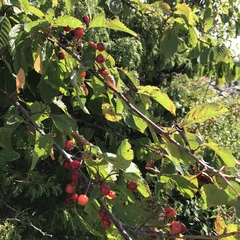 Prunus cerasust0
 Quercus suber
 Malus domestica
 Olea
 Eucalyptus
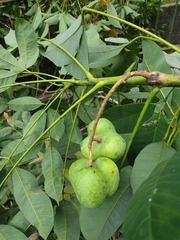 Hevea brasiliensis
 Avicennia marina
 Vitis