View: List Claim type Research area Organism Taxon as written Decade Paper Intervention effect observed original result negative measured Claim · model-written summary
The higher nanoparticle concentration caused a more pronounced decrease .
higher concentration of chitosan nanoparticles (0.1%) e1 magnitude of decrease e1 much pronounced e1 Not reported Comparator
Verbatim
e0 “Vicia faba seeds cv. Sakha 1, followed by germination and subsequent growth of seedlings for seven days ”
✓ located verbatim in the source · abstract, characters 153–256 e1 “The magnitude of decrease was much pronounced with the higher concentration of chitosan nanoparticles (0.1%). ”
✓ located verbatim in the source · abstract, characters 570–679 Other claims from this paper (6) Intervention effect author interpretation original result positive measured Claim · model-written summary
Bejar seemed more tolerant of iron deficiency than Jozdan, Amol 2 and Shiroudi, with a smaller biomass decrease .
iron deficiency condition e4 magnitude of decrease of total biomass e4 seemed to be more tolerant e4 Jozdan, Amol 2, and Shiroudi e4 Verbatim
t0 “Iranian Rice Landraces ”
✓ located verbatim in the source · title, characters 48–70 e4 “Based on the magnitude of decrease of total biomass under iron deficiency condition, genotypes such as Musa-Tarom, Bejar, and Zayande Roud seemed to be more tolerant in comparison to Jozdan, Amol 2, and Shiroudi ”
✓ located verbatim in the source · abstract, characters 1500–1711 Other claims from this paper (9) Intervention effect Iron fertilizer and genotype significantly affected iron content of rice, with an interaction. Intervention effect Iron fertilizer and genotype significantly affected shoot dry weight, root dry weight and total dry weight of rice. Intervention effect Iron fertilizer and genotype significantly affected leaf area, root length and root volume of rice. Intervention effect Iron fertilizer and genotype significantly affected the number of tillers of rice. Intervention effect Northern rice landraces lost dry weight under iron deficiency, from a mean of 0.215 g per plant under no iron deficiency. Intervention effect Northern improved rice genotypes lost dry weight under iron deficiency, from a mean of 0.138 g per plant under no iron deficiency. Intervention effect Central Iranian rice genotypes lost dry weight under iron deficiency, from a mean of 0.255 g per plant under no iron deficiency. Intervention effect Musa-Tarom seemed more tolerant of iron deficiency than Jozdan, Amol 2 and Shiroudi, with a smaller biomass decrease. Intervention effect Zayande Roud seemed more tolerant of iron deficiency than Jozdan, Amol 2 and Shiroudi, with a smaller biomass decrease. Intervention effect author interpretation original result positive measured Claim · model-written summary
Musa-Tarom seemed more tolerant of iron deficiency than Jozdan, Amol 2 and Shiroudi, with a smaller biomass decrease .
iron deficiency condition e4 magnitude of decrease of total biomass e4 seemed to be more tolerant e4 Jozdan, Amol 2, and Shiroudi e4 Verbatim
t0 “Iranian Rice Landraces ”
✓ located verbatim in the source · title, characters 48–70 e4 “Based on the magnitude of decrease of total biomass under iron deficiency condition, genotypes such as Musa-Tarom, Bejar, and Zayande Roud seemed to be more tolerant in comparison to Jozdan, Amol 2, and Shiroudi ”
✓ located verbatim in the source · abstract, characters 1500–1711 Other claims from this paper (9) Intervention effect Iron fertilizer and genotype significantly affected iron content of rice, with an interaction. Intervention effect Iron fertilizer and genotype significantly affected shoot dry weight, root dry weight and total dry weight of rice. Intervention effect Iron fertilizer and genotype significantly affected leaf area, root length and root volume of rice. Intervention effect Iron fertilizer and genotype significantly affected the number of tillers of rice. Intervention effect Northern rice landraces lost dry weight under iron deficiency, from a mean of 0.215 g per plant under no iron deficiency. Intervention effect Northern improved rice genotypes lost dry weight under iron deficiency, from a mean of 0.138 g per plant under no iron deficiency. Intervention effect Central Iranian rice genotypes lost dry weight under iron deficiency, from a mean of 0.255 g per plant under no iron deficiency. Intervention effect Bejar seemed more tolerant of iron deficiency than Jozdan, Amol 2 and Shiroudi, with a smaller biomass decrease. Intervention effect Zayande Roud seemed more tolerant of iron deficiency than Jozdan, Amol 2 and Shiroudi, with a smaller biomass decrease. Intervention effect author interpretation original result positive measured Claim · model-written summary
Zayande Roud seemed more tolerant of iron deficiency than Jozdan, Amol 2 and Shiroudi, with a smaller biomass decrease .
iron deficiency condition e4 magnitude of decrease of total biomass e4 seemed to be more tolerant e4 Jozdan, Amol 2, and Shiroudi e4 Verbatim
t0 “Iranian Rice Landraces ”
✓ located verbatim in the source · title, characters 48–70 e4 “Based on the magnitude of decrease of total biomass under iron deficiency condition, genotypes such as Musa-Tarom, Bejar, and Zayande Roud seemed to be more tolerant in comparison to Jozdan, Amol 2, and Shiroudi ”
✓ located verbatim in the source · abstract, characters 1500–1711 Other claims from this paper (9) Intervention effect Iron fertilizer and genotype significantly affected iron content of rice, with an interaction. Intervention effect Iron fertilizer and genotype significantly affected shoot dry weight, root dry weight and total dry weight of rice. Intervention effect Iron fertilizer and genotype significantly affected leaf area, root length and root volume of rice. Intervention effect Iron fertilizer and genotype significantly affected the number of tillers of rice. Intervention effect Northern rice landraces lost dry weight under iron deficiency, from a mean of 0.215 g per plant under no iron deficiency. Intervention effect Northern improved rice genotypes lost dry weight under iron deficiency, from a mean of 0.138 g per plant under no iron deficiency. Intervention effect Central Iranian rice genotypes lost dry weight under iron deficiency, from a mean of 0.255 g per plant under no iron deficiency. Intervention effect Musa-Tarom seemed more tolerant of iron deficiency than Jozdan, Amol 2 and Shiroudi, with a smaller biomass decrease. Intervention effect Bejar seemed more tolerant of iron deficiency than Jozdan, Amol 2 and Shiroudi, with a smaller biomass decrease. Intervention effect observed original result measured Claim · model-written summary
Inbreeding depression tended to be smaller under robbing than under netting.
robbing conditions e1 the magnitude of ID e1 Verbatim
e0 “Comastoma pulmonarium produced seeds via selfing at the study site
✓ located verbatim in the source · abstract, characters 490–556 e1 “in comparison with netting, the magnitude of ID under robbing conditions tended to decrease ”
✓ located verbatim in the source · abstract, characters 816–907 Other claims from this paper (6) Intervention effect observed original result measured Claim · model-written summary
Ammonium sulfate produced a larger soil pH decrease than urea.
ammonium sulfate e0 Verbatim
e0 “the magnitude of the pH decrease was greater by ammonium sulfate than by urea ”
✓ located verbatim in the source · abstract, characters 589–666 t0 “Influence of Urea and Ammonium Sulfate on Soil Acidity Indices in Lowland Rice Production ”
✓ located verbatim in the source · title, characters 0–89 Other claims from this paper (9) Intervention effect observed original result measured Claim · model-written summary
Electron-beam irradiation caused a slight decrease in the gelatinization temperature of wheat starch.
electron‐beam irradiation e3 gelatinization temperature e3 slight decrease e3 Not reported Comparator
Verbatim
e2 “the molar mass of wheat starches decrease d by one order of magnitude when the irradiation doses reached 4.4 kGy ”
✓ located verbatim in the source · abstract, characters 1028–1139 e3 “the electron‐beam irradiation caused a slight decrease in gelatinization temperature ”
✓ located verbatim in the source · abstract, characters 522–606 Other claims from this paper (6) Intervention effect observed original result negative significant (as stated) measured Claim · model-written summary
Fluoranthene at 1 mg/L decrease d pea seed germination (93% germination).
Not reported Comparator
Verbatim
e2 “in pea the significant decrease in germination was found in two orders of magnitude higher FLT concentration (1 mg/L; 93% germination) ”
✓ located verbatim in the source · abstract, characters 421–555 Other claims from this paper (8) Intervention effect observed original result negative measured Claim · model-written summary
Wheat potassium content decrease d by 2.0 at 20 mg/kg sulphur.
potassium content e0 Not reported Comparator
Verbatim
e0 “The magnitude of decrease in potassium content was 2.0, 6.1 and 8.2 at 20, 40 and 60 mg/kg sulphur. ”
✓ located verbatim in the source · abstract, characters 1531–1630 t0 “wheat ”
✓ located verbatim in the source · title, characters 71–76 Other claims from this paper (15) Intervention effect observed original result negative measured Claim · model-written summary
Wheat potassium content decrease d by 6.1 at 40 mg/kg sulphur.
potassium content e0 Not reported Comparator
Verbatim
e0 “The magnitude of decrease in potassium content was 2.0, 6.1 and 8.2 at 20, 40 and 60 mg/kg sulphur. ”
✓ located verbatim in the source · abstract, characters 1531–1630 t0 “wheat ”
✓ located verbatim in the source · title, characters 71–76 Other claims from this paper (15) Lexical search (BM25). All words must match; if nothing does, any word. Organism names also match every spelling of the same organism. No semantic search yet.
 Vicia fabae0
 Oryza sativa
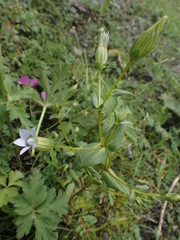 Comastoma pulmonarium
 Triticum aestivum
 Lathyrus oleraceus