View: List Claim type Research area Organism Taxon as written Decade Paper Association observed original result no effect measured Claim · model-written summary
Parasitoid development time was unaffected under high CO2.
development time e0 Verbatim
e0 “development time and adult male size were unaffected ”
✓ located verbatim in the source · abstract, characters 1243–1295 e1 “Larvae feeding on high CO 2 aspen exhibited the largest reduction in performance , relative to larvae feeding on birch, oak, or maple ”
✓ located verbatim in the source · abstract, characters 688–820 t0 “CO 2 ‐mediated changes in tree chemistry ”
✓ located verbatim in the source · abstract, characters 60–100 Other claims from this paper (12) Observation observed original result no effect measured Claim · model-written summary
Parasitoid development times did not differ across host populations.
their development times e0 Verbatim
e0 “parasitism success differed in terms of parasitoid adult emergence and their biomass, but not their development times ”
✓ located verbatim in the source · abstract, characters 1144–1261 e1 “a native Dutch plant species, Brassica rapa ”
✓ located verbatim in the source · abstract, characters 581–624 Other claims from this paper (6) Association observed original result no effect measured Claim · model-written summary
Percentage parasitism and parasitoid size were not correlated with foliar nitrogen concentration.
Percentage parasitism and parasitoid size e5 no_change inferred e5 foliar nitrogen concentration e5 Verbatim
e2 “consisting of Brassica oleracea var capitata, Plutella xylostella (Lepidoptera) larvae and Cotesia vestalis ( parasitoid ) ”
✓ located verbatim in the source · abstract, characters 681–801 e5 “Percentage parasitism and parasitoid size were not correlated with foliar nitrogen concentration ”
✓ located verbatim in the source · abstract, characters 1344–1440 Other claims from this paper (6) Intervention effect observed original result no effect measured Claim · model-written summary
Powdery mildew did not change the performance of Pieris brassicae caterpillars on Brassica rapa .
powdery mildew e2 powdery mildew e2 pathogen performance of P. brassicae e2 Not reported Comparator
Verbatim
e2 “The performance of P. brassicae was unaffected by powdery mildew ”
✓ located verbatim in the source · abstract, characters 840–904 t0 “interferes with parasitoid attraction in Brassica rapa ”
✓ located verbatim in the source · title, characters 64–118 Other claims from this paper (5) Association observed original result no effect measured Claim · model-written summary
Adult male parasitoid size was unaffected under high CO2.
development time and adult male size were unaffected e0 Not reported Treatment
Verbatim
e0 “development time and adult male size were unaffected ”
✓ located verbatim in the source · abstract, characters 1243–1295 t0 “CO 2 ‐mediated changes in tree chemistry ”
✓ located verbatim in the source · abstract, characters 60–100 Other claims from this paper (12) Association observed original result no effect not significant (as stated) measured Claim · model-written summary
Parasitoid residence time did not differ significantly among treatments.
residence time of the parasitoid e0 No significant differences e0 Verbatim
e0 “No significant differences in the residence time of the parasitoid in the aphid colony occurred between treatments. ”
✓ located verbatim in the source · abstract, characters 1259–1374 e1 “Johnsongrass, Sorghum halepense ”
✓ located verbatim in the source · abstract, characters 56–87 e2 “Lysiphlebus testaceipes
✓ located verbatim in the source · abstract, characters 212–235 Other claims from this paper (9) Intervention effect observed original result no effect measured Claim · model-written summary
Parasitoid parasitism and emergence rates and developmental durations were similar on infected and uninfected plants.
parasitism rates,emergence rates and developmental durations of the parasitoid e0 uninfected plants e0 Not reported Taxon
Verbatim
e0 “the parasitism rates,emergence rates and developmental durations of the parasitoid on infected and uninfected plants were similar ”
✓ located verbatim in the source · abstract, characters 892–1021 Other claims from this paper (3) Association observed original result no effect not significant (as stated) measured Claim · model-written summary
Progeny fitness did not differ significantly between hosts at each parasitoid density.
no significant difference e1 between hosts e1 Verbatim
e0 “Amaranth is an African indigenous vegetable ”
✓ located verbatim in the source · abstract, characters 0–43 e1 “There was no significant difference between hosts in regard to progeny fitness at each parasitoid density ”
✓ located verbatim in the source · abstract, characters 1300–1405 Other claims from this paper (8) Intervention effect observed original result no effect measured Claim · model-written summary
Heronsbill did not improve fecundity of the parasitoid .
did not improve e5 Not reported Comparator
Verbatim
t0 “Alyssum (Lobularia maritima ) ”
✓ located verbatim in the source · title, characters 0–28 e0 “using the widely-distributed parasitoid , Cotesia vestalis (Haliday) ”
✓ located verbatim in the source · abstract, characters 549–616 e5 “heronsbill (Portulaca grandiflora Hook.) (Portulacaceae) denied benefit to the pest and promoted longevity of the parasitoid under no-choice conditions but did not improve fecundity and was repellent to female parasitoid s under choice conditions ”
✓ located verbatim in the source · abstract, characters 1165–1410 Other claims from this paper (10) Intervention effect observed original result no effect not significant (as stated) measured Claim · model-written summary
Neither parasitoid performed significantly better on hosts fed leaves induced by conspecific parasitoid s than on hosts fed leaves induced by unparasitized caterpillars.
plants continuously induced by a conspecific parasitoid e0 parasitoid species e0 did not perform significantly better e0 unparasitised caterpillars e0 Not reported Second interactor
Verbatim
e0 “Both parasitoid species did not perform significantly better when their host was fed with leaves from plants continuously induced by a conspecific parasitoid relative to unparasitised caterpillars. ”
✓ located verbatim in the source · abstract, characters 1169–1366 e1 “leaf material of Brassica oleracea plants ”
✓ located verbatim in the source · abstract, characters 840–881 e2 “parasitoid s Hyposoter ebeninus and Cotesia glomerata ”
✓ located verbatim in the source · abstract, characters 602–654 Other claims from this paper (1) Lexical search (BM25). All words must match; if nothing does, any word. Organism names also match every spelling of the same organism. No semantic search yet.
 Brassica rapa
 Brassica oleracea
 Pieris brassicae
 Sorghum halepense
 Amaranthus caudatus
 Portulaca grandiflora
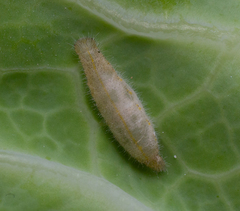 Hyposoter ebeninus