View: List Claim type Research area Organism Taxon as written Decade Paper Method / resource observed original result basis n/a Claim · model-written summary
The first transcriptome resource for the fern was presented.
first transcriptome e0 Not reported Comparator Value
Verbatim
e0 “This dataset presents the first transcriptome for Phlebodium aureum ‘Mandaianum’ ”
✓ located verbatim in the source · abstract, characters 0–80 Other claims from this paper (7) Method / resource observed original result measured Claim · model-written summary
The study provides the first hormone transcriptome analysis of tomato leaves.
hormone transcriptome analysis e0 Verbatim
e0 “The resulting data provide the first hormone transcriptome analysis of leaves in tomato. ”
✓ located verbatim in the source · abstract, characters 965–1053 Other claims from this paper (6) Method / resource observed original result measured Claim · model-written summary
RNA-Seq generated the first sugar beet reference transcriptome .
first reference transcriptome e0 Verbatim
e0 “We therefore used RNA-Seq to generate the first reference transcriptome . ”
✓ located verbatim in the source · abstract, characters 1043–1115 t0 “sugar beet ”
✓ located verbatim in the source · title, characters 47–57 Other claims from this paper (3) Method / resource observed original result basis n/a Claim · model-written summary
The study reported the first transcriptome of overwintering Cryptomeria fortunei .
first transcriptome e0 Not reported Comparator Value
Verbatim
e0 “we report the first transcriptome of overwintering C.fortunei ”
✓ located verbatim in the source · abstract, characters 1761–1822 Other claims from this paper (10) Method / resource observed original result measured Claim · model-written summary
A first full-length Alfalfa root transcriptome was constructed.
full-length transcriptome e0 Verbatim
e0 “We constructed the first full-length transcriptome for Alfalfa root. ”
✓ located verbatim in the source · abstract, characters 252–320 Other claims from this paper (9) Method / resource The Alfalfa root transcriptome yielded 21.53Gb clean data. Method / resource The Alfalfa root transcriptome included 566,076 reads of Insert. Method / resource The Alfalfa root transcriptome included 409,291 full length reads non-Chimeric sequences. Observation Three comparisons yielded 2615, 6011, and 4617 differentially expressed genes, respectively. Observation Drought-responsive differentially expressed genes were enriched in ribosome, glutathione metabolism, and amino acid biosynthesis pathways. Observation AP2/ERF-ERF, C2H2, and bHLH transcription factors were prominent among differentially expressed genes. Observation Thirty-two C2H2 genes were differentially expressed in three groups. Observation C3H, MYB, GRAS, and NAC transcription factors changed significantly in expression across three comparisons. Observation Twenty-four genes participated in ABA and auxin signaling in response to drought. Method / resource observed original result positive basis n/a Claim · model-written summary
The first de novo pecan transcriptome assembly was obtained.
de novo assembly of pecan transcriptome e0 Not reported Comparator
Verbatim
e0 “we obtained the first de novo assembly of pecan transcriptome ”
✓ located verbatim in the source · abstract, characters 413–474 Other claims from this paper (16) Method / resource observed original result measured Claim · model-written summary
The first E. colona transcriptome was assembled.
assembled transcriptome e0 Not reported Value
Verbatim
e0 “This research had generated the first assembled transcriptome of E. colona ”
✓ located verbatim in the source · abstract, characters 2007–2081 Other claims from this paper (7) Observation author interpretation original result basis n/a Claim · model-written summary
This is the first transcriptome analysis of Punica granatum .
first transcriptome analysis e0 Verbatim
e0 “This is the first transcriptome analysis of P. granatum L. ”
✓ located verbatim in the source · abstract, characters 1563–1621 Other claims from this paper (12) Observation The Tunisia pomegranate variety has softer seeds and big arils. Method / resource 35.1 Gb of sequence data were acquired. Method / resource The data included 280,881,106 raw reads. Method / resource De novo assembly generated 132,287 transcripts. Method / resource Assembly yielded 105,743 representative unigenes. Method / resource About 13,805 unigenes (37.7%) were longer than 1,000 bp. Method / resource A total of 76,806 unigenes were annotated. Method / resource 72.63% of high-quality reads had at least one significant match to an existing gene model. Mechanism Seed formation in the two pomegranate cultivars involves lignin biosynthesis and metabolism, including genes encoding laccase, peroxidase, and WRKY, MYB and NAC transcription factors. Observation Lignin-related and cellulose synthesis-related genes were highly expressed in hard-seed pomegranate. Observation Expression of genes related to flavonoids and programmed cell death was slightly higher in soft-seed pomegranates. Observation Selected identified genes were validated by qRT-PCR. Method / resource observed original result basis n/a Claim · model-written summary
The study provides the first root transcriptome of Cenostigma pyramidale under three salt stress times.
first root transcriptome e0 Not reported Comparator
Verbatim
e0 “Our study provides the first root transcriptome of Cenostigma pyramidale ”
✓ located verbatim in the source · abstract, characters 80–152 Other claims from this paper (10) Observation 932 upregulated DEGs were observed in C. pyramidale roots under salt stress for 30 min. Observation 804 upregulated DEGs were observed in C. pyramidale roots under salt stress for 2 h. Observation 3157 upregulated DEGs were observed in C. pyramidale roots under salt stress for 11 days. Observation 164 downregulated DEGs were observed in C. pyramidale roots under salt stress for 30 min. Observation 273 downregulated DEGs were observed in C. pyramidale roots under salt stress for 2 h. Observation 1332 downregulated DEGs were observed in C. pyramidale roots under salt stress for 11 days. Observation In early salt stress periods, the response of C. pyramidale was mainly achieved by stabilizing ion homeostasis (Na+, K+), Ca2+ signaling, transcription factor modulation, water transport and oxidative stress. Observation At 11 days of salt stress, C. pyramidale showed higher modulation of transcription factors including WRKY, MYB, bHLH, NAC and HSF families. Observation At 11 days of salt stress, DEGs involved in hormonal responses, water transport, sugar metabolism, proline and reactive oxygen scavenging were also modulated. Observation Five selected DEGs were validated by qPCR. Observation observed original result positive basis n/a Claim · model-written summary
The study provides the first hormone transcriptome analysis of tomato leaves.
hormone transcriptome analysis of leaves e0 Verbatim
e0 “The resulting data provide the first hormone transcriptome analysis of leaves in tomato. ”
✓ located verbatim in the source · abstract, characters 965–1053 Other claims from this paper (6) Lexical search (BM25). All words must match; if nothing does, any word. Organism names also match every spelling of the same organism. No semantic search yet.
 Phlebodium aureume0
 Solanum lycopersicum
 Beta vulgaris subsp. vulgaris
 Cryptomeria japonica var. sinensis
 Medicago sativa
 Carya illinoinensis
 Echinochloa colona
 Punica granatum
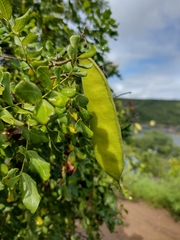 Cenostigma pyramidale