View: List Claim type Research area Organism Taxon as written Decade Paper Observation author interpretation original result basis n/a Claim · model-written summary
The protective function of plant secretory tissues is proposed to have preceded their attraction function .
protective function preceded the function of attraction e0 Not reported Direction
Verbatim
e0 “The protective function preceded the function of attraction. ”
✓ located verbatim in the source · abstract, characters 318–378 t0 “plants ”
✓ located verbatim in the source · title, characters 47–53 Other claims from this paper (3) Mechanism author interpretation review summary basis n/a Claim · model-written summary
Anatomical features typical of sclerophylls serve primarily a protective function .
protective function e1 anatomical features typical of sclerophylls e1 Verbatim
e1 “I believe that critical examination of the data available indicates that the anatomical features typical of sclerophylls serve a fundamentally protective function ”
✓ located verbatim in the source · abstract, characters 1185–1347 Other claims from this paper (1) Mechanism hypothesis original result basis n/a Claim · model-written summary
The authors hypothesize that the exudate possibly has a protective function against pathogen and herbivore attacks.
pathogen e0 pathogen herbivore e0 herbivore protective function e0 Verbatim
t0 “Polygala adenophora
✓ located verbatim in the source · title, characters 19–38 e0 “We hypothesize that this exudate possibly has a protective function , acting against pathogen and herbivore attacks ”
✓ located verbatim in the source · abstract, characters 1343–1457 Other claims from this paper (3) Mechanism hypothesis original result measured Claim · model-written summary
Polyisoprenoids may play a protective function against salinity in mangrove leaves and roots.
polyisoprenoids e6 protective function against salinity e6 Verbatim
e6 “This study implied that polyisoprenoids may play a protective function against salinity in the mangrove leaves and roots ”
✓ located verbatim in the source · abstract, characters 1566–1686 Other claims from this paper (7) Mechanism observed review summary positive basis n/a Claim · model-written summary
Calcium ameliorates mineral toxicity by maintaining normal plasmalemma function and increasing protective enzyme activities.
amelioration of mineral toxicity e0 maintaining normal plasmalemma function and increasing protective enzyme activities e1 Verbatim
e0 “the amelioration of mineral toxicity is achieved through ”
✓ located verbatim in the source · abstract, characters 338–394 e1 “maintaining normal plasmalemma function and increasing protective enzyme activities ”
✓ located verbatim in the source · abstract, characters 519–602 t0 “Higher Plants ”
✓ located verbatim in the source · title, characters 44–57 t1 “Calcium ”
✓ located verbatim in the source · title, characters 61–68 Other claims from this paper (4) Mechanism author interpretation original result positive basis n/a Claim · model-written summary
Hydrogen peroxide has a protective function that leads to the death of pathogen mycelial cells.
Hydrogen peroxide e3 death of pathogen mycelial cells e3 protective function e3 Verbatim
e1 “the development of stem rust of wheat ”
✓ located verbatim in the source · abstract, characters 723–760 e3 “Hydrogen peroxide performs a protective function leading to the death of pathogen mycelial cells ”
✓ located verbatim in the source · abstract, characters 1950–2046 Other claims from this paper (11) Observation observed original result measured Claim · model-written summary
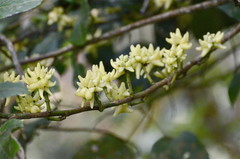
The protective floral bracteoles of Macaranga hullettii function as breeding sites for thrips
floral bracteoles e1 the protective floral bracteoles function as breeding sites for thrips e1 Verbatim
e0 “Macaranga hullettii is pollinated predominantly by one thrips species, Neoheegeria sp.
✓ located verbatim in the source · abstract, characters 287–373 e1 “the protective floral bracteoles function as breeding sites for thrips ”
✓ located verbatim in the source · abstract, characters 436–506 Other claims from this paper (8) Mechanism author interpretation original result positive basis n/a Claim · model-written summary
The authors interpreted antioxidant enzyme systems as a protective antioxidant function .
protecting function of plants e0 antioxidant enzyme systems e0 Verbatim
t0 “Vallisneria spiralis L
✓ located verbatim in the source · title, characters 59–81 e0 “antioxidant enzyme systems may be regarded as a protecting function of plants and having effect in antioxidation ”
✓ located verbatim in the source · abstract, characters 691–803 Other claims from this paper (5) Mechanism author interpretation review summary basis n/a Claim · model-written summary
Protective substances cooperate in modulating seed desiccation tolerance.
desiccation tolerance e0 protective substance e0 Verbatim
e0 “Any protective substance does not function independently but cooperate with each other to modulate the desiccation tolerance ”
✓ located verbatim in the source · abstract, characters 379–503 t0 “Seed desiccation-tolerance ”
✓ located verbatim in the source · title, characters 0–26 Other claims from this paper (4) Mechanism author interpretation original result basis n/a Claim · model-written summary
The authors conclude that anthocyanins do not have an important protective role under increased light and cytokinin levels.
increased light intensity and increased cytokinin levels e0 protection against stress-promoting conditions e0 anthocyanins do not serve an important function e0 Verbatim
e0 “anthocyanins do not serve an important function in protection against stress-promoting conditions such as increased light intensity and increased cytokinin levels ”
✓ located verbatim in the source · abstract, characters 573–735 t0 “Arabidopsis thaliana
✓ located verbatim in the source · title, characters 39–59 Other claims from this paper (5) Lexical search (BM25). All words must match; if nothing does, any word. Organism names also match every spelling of the same organism. No semantic search yet.
 Triticum aestivum
 Macaranga hullettii
 Thrips
 Vallisneria spiralis
 Arabidopsis thaliana