
Claim · model-written summary
Silphium had greatest root mass loss.
 Silphium
Verbatim
e0“Root mass loss was greatest for silphium, owing to low neutral and acid detergent fibers and lignin contents (6%) relative to the other species (16%–25%)”
Title
Root decomposition and nutrient dynamics in multifunctional forage‐biomass buffer‐strip systems
Helen C. S. Amorim; Amanda J. Ashworth; Taylor C. Adams; et al. Agrosystems Geosciences & Environment 2025. doi:10.1002/agg2.70030
Other claims from this paper (8)
- Observation Intermediate wheatgrass had greatest root carbon loss.
- Mechanism Low root mass, area and volume likely enhanced decomposition of silphium and intermediate wheatgrass.
- Intervention effect Poultry litter plots had greater root mass loss.
- Intervention effect Poultry litter plots had greater C, N and P mineralization.
- Observation Soil organic carbon stocks were mostly similar across species and amendments.
- Intervention effect Silphium with poultry litter had 27% to 50% greater soil organic carbon stocks after four years.
- Association Root chemistry and morphology primarily affected decomposition rates.
- Association Soil moisture and temperature drove soil carbon dioxide efflux.
 Penstemon digitalis
 Bombus
 Clematis
 Mirabilis
 Coreopsis
 Galium
 Rhynchospora
 Baptisia
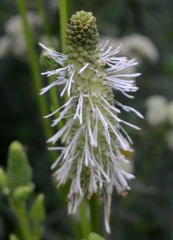 Sanguisorba
 Matelea
 Symphyotrichum
 Neotephritis finalis