
Claim · model-written summary
Low and medium concentrations of P. oxalicum enhanced the biosynthesis of phenolic compounds in E. senticosus leaves.
- Taxon
- Eleutherococcus senticosus
 Eleutherococcus senticosust0
- Treatment
- optimal concentrations of P. oxalicum (low, CL; medium, CM)e0
- Interactor
- P. oxalicum
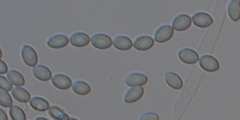 Penicillium oxalicume1symbiont
- Outcome
- biosynthesis of phenolic compoundse0
- Direction
- enhancede0
Not reportedComparator
Verbatim
e0“optimal concentrations of P. oxalicum (low, CL; medium, CM) enhanced the biosynthesis of phenolic compounds”
t0“Eleutherococcus senticosus”
e1“P. oxalicum (low, CL; medium, CM)”
Title
Mingyuan Xu; Yanjun Ren; Xiaotong Yang; et al. BMC Plant Biology 2026. doi:10.1186/s12870-026-08852-9
Other claims from this paper (7)
- Intervention effect Low and medium concentrations of P. oxalicum led to significant accumulation of C6C1- and C6C3C6-type phenolics.
- Intervention effect High concentrations (CH) of P. oxalicum suppressed the accumulation of most primary and secondary metabolites.
- Observation Alterations in primary metabolism primarily involved carbohydrate and amino acid pathways, such as alanine, aspartate, and glutamate metabolism.
- Mechanism The authors interpret the changes as a reallocation of carbon and nitrogen from primary metabolism to defense-associated secondary metabolism under optimal elicitation conditions.
- Intervention effect Eleutheroside E and most medicinal compounds reached maximum accumulation in the CL-treated group.
- Intervention effect Isofraxidin peaked in the CM-treated group.
- Observation GC-MS-based non-targeted profiling identified 127 primary metabolites in E. senticosus leaves.