Abstract
ABSTRACT A shadehouse pot trial was conducted to study the efficiency of single and dual inoculations with selected Trichoderma and Bacillus isolates on performance of dry bean plants (Phaseolus vulgaris L.) grown in composted pine bark (CPB) potting medium. All the plant treatments inoculated with Trichoderma spp. and/or Bacillus spp. had higher photosynthetic efficiency (Fv/Fm values). Of the treatments, only B. subtilis B69 showed a significant increase (P = 0.02) in Fv/Fm values over the growth period. The Trichoderma and Bacillus treated plants showed increase in dry shoot biomass. The greatest degree of nodulation was observed in Trichoderma and/or Bacillus treated plants. Increase in nitrogen concentrations were observed in leaves of plants inoculated with Trichoderma and Bacillus isolates. Only T. atroviride SY3A significantly increased phosphorus concentrations in leaves. These results depict and highlight the role these organisms can play in plant root-plant growth promoting rhizobacteria or plant growth promoting fungi (PGPR/PGPF) interaction in a nutrient-poor growth medium.
Abstract from the paper’s OpenAlex record, shown for indexing and research. Copyright remains with the authors or the publisher. Read at the source ↗
The text the model read, with the source record’s inline markup (italics, sub- and superscripts) rendered and its character entities decoded; quote offsets refer to the raw text.
Claims 8
Claim · model-written summary
Inoculated bean plants had higher photosynthetic efficiency.
- Taxon
- dry beane1
- Treatment
- inoculated with Trichoderma spp. and/or Bacillus spp.e0
- Interactor
- Trichoderma spp.
 Trichodermae0other
- Second interactor
- Bacillus spp.e0other
- Outcome
- photosynthetic efficiency (Fv/Fm values)e0
- Direction
- highere0
Not reportedComparator
Organisms pictured · Representative pictures of the matched species, not figures from the paper.

Verbatim
e0“All the plant treatments inoculated with Trichoderma spp. and/or Bacillus spp. had higher photosynthetic efficiency (Fv/Fm values)”
e1“dry bean plants (Phaseolus vulgaris L.)”
Claim · model-written summary
B. subtilis B69 significantly increased bean Fv/Fm over the growth period.
- Taxon
- dry beane1
- Treatment
- B. subtilis B69e0
- Interactor
- B. subtilis B69
 Bacillus subtilise0other
- Outcome
- Fv/Fm valuese0
- Direction
- increasee0
- Qualifier
- over the growth periode0
Not reportedComparator
Organisms pictured · Representative pictures of the matched species, not figures from the paper.

Verbatim
e0“only B. subtilis B69 showed a significant increase (P = 0.02) in Fv/Fm values over the growth period”
e1“dry bean plants (Phaseolus vulgaris L.)”
Claim · model-written summary
Trichoderma-treated bean plants increased dry shoot biomass.
- Taxon
- dry beane1
- Treatment
- Trichodermae0
- Interactor
- TrichodermaTrichodermae0other
- Outcome
- dry shoot biomasse0
- Direction
- increasee0
Not reportedComparator
Organisms pictured · Representative pictures of the matched species, not figures from the paper.
Verbatim
e0“The Trichoderma and Bacillus treated plants showed increase in dry shoot biomass”
e1“dry bean plants (Phaseolus vulgaris L.)”
Claim · model-written summary
Bacillus-treated bean plants increased dry shoot biomass.
- Taxon
- dry beane1
- Treatment
- Bacilluse0
- Interactor
- Bacilluse0other
- Outcome
- dry shoot biomasse0
- Direction
- increasee0
Not reportedComparator
Verbatim
e0“The Trichoderma and Bacillus treated plants showed increase in dry shoot biomass”
e1“dry bean plants (Phaseolus vulgaris L.)”
Claim · model-written summary
Trichoderma or Bacillus treatment yielded the greatest bean nodulation.
- Taxon
- dry beane1
- Treatment
- Trichoderma and/or Bacilluse0
- Interactor
- TrichodermaTrichodermae0other
- Second interactor
- Bacilluse0other
- Outcome
- degree of nodulatione0
- Direction
- greateste0
Not reportedComparator
Organisms pictured · Representative pictures of the matched species, not figures from the paper.
Verbatim
e0“The greatest degree of nodulation was observed in Trichoderma and/or Bacillus treated plants”
e1“dry bean plants (Phaseolus vulgaris L.)”
Claim · model-written summary
Trichoderma-inoculated bean plants had increased leaf nitrogen concentrations.
- Taxon
- dry beane1
- Organ / stage
- leavese0
- Treatment
- inoculated with Trichodermae0
- Interactor
- TrichodermaTrichodermae0other
- Outcome
- nitrogen concentrationse0
- Direction
- Increasee0
Not reportedComparator
Organisms pictured · Representative pictures of the matched species, not figures from the paper.
Verbatim
e0“Increase in nitrogen concentrations were observed in leaves of plants inoculated with Trichoderma and Bacillus isolates”
e1“dry bean plants (Phaseolus vulgaris L.)”
Claim · model-written summary
Bacillus-inoculated bean plants had increased leaf nitrogen concentrations.
- Taxon
- dry beane1
- Organ / stage
- leavese0
- Treatment
- inoculated with Trichoderma and Bacillus isolatese0
- Interactor
- Bacilluse0other
- Outcome
- nitrogen concentrationse0
- Direction
- Increasee0
Not reportedComparator
Verbatim
e0“Increase in nitrogen concentrations were observed in leaves of plants inoculated with Trichoderma and Bacillus isolates”
e1“dry bean plants (Phaseolus vulgaris L.)”
Claim · model-written summary
T. atroviride SY3A significantly increased bean leaf phosphorus concentration.
- Taxon
- dry beane1
- Organ / stage
- leavese0
- Treatment
- T. atroviride SY3Ae0
- Interactor
- T. atroviride SY3A
 Trichoderma atroviridee0other
- Outcome
- phosphorus concentrationse0
- Direction
- increasede0
Not reportedComparator
Organisms pictured · Representative pictures of the matched species, not figures from the paper.
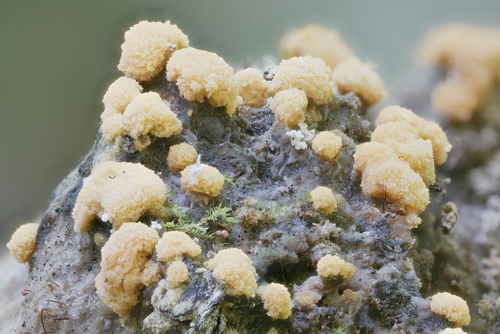
Verbatim
e0“Only T. atroviride SY3A significantly increased phosphorus concentrations in leaves”
e1“dry bean plants (Phaseolus vulgaris L.)”
The same questions in other papers
Bacillus subtilis · physiology: photosynthesis · Phaseolus vulgaris (common bean)Positive and negative results
1 in the opposite direction
- no effect
Trichoderma · nutrient: content · Phaseolus vulgaris (common bean)Positive and negative results
2 in the opposite direction
- no effect
- negative
Trichoderma · symbiosis · Phaseolus vulgaris (common bean)Results agree
1 paper in the same direction as this paper
- positive
Trichoderma · growth · Phaseolus vulgaris (common bean)Results agree
11 papers in the same direction as this paper
- positive
- positive
- positive
8 papers more in this group
See all 12 papers →inoculation · physiology: photosynthesis · Phaseolus vulgaris (common bean)Positive and negative results
9 papers in the same direction as this paper · 5 in the opposite direction
- no effect
- negative
- negative
11 papers more in this group
See all 15 papers →inoculation · nutrient: content · Phaseolus vulgaris (common bean)Positive and negative results
39 papers in the same direction as this paper · 4 in the opposite direction
- no effect
- negative
- negative
40 papers more in this group
See all 44 papers →Claims are grouped by organism, treatment and what was measured or targeted. A paper counts as positive when any of its claims in the group is positive.