View: List Claim type Research area Organism Taxon as written Decade Paper Alien plants can be associated with a decrease in local and regional native richness even when at low abundance 3 Show all 3 → Association observed original result measured Claim · model-written summary
The magnitude of the landscape-scale decrease was best explained by the number of plots where an alien species was above its critical abundance.
number of plots where an alien species was found above its critical abundance e5 magnitude of the decrease at the landscape scale e5 Not reported Direction
Verbatim
e5 “The magnitude of the decrease at the landscape scale was best explained by the number of plots where an alien species was found above its critical abundance ”
✓ located verbatim in the source · abstract, characters 1406–1562 Other claims from this paper (5) Observation observed original result negative measured Claim · model-written summary
Declines in native gamma richness were an order of magnitude greater than declines in native alpha richness, 32.0 vs 2.2 species.
alien plant species e0 declines in native γ ‐richness e3 32.0 vs. 2.2 species e3 Verbatim
e0 “In an analysis of 47 widespread alien plant species occurring across a 1,000 km 2 landscape, we examined the relationship between their local abundance and native plant species richness in 594 grassland plots ”
✓ located verbatim in the source · abstract, characters 327–535 e3 “declines in native γ ‐richness were, on average, an order of magnitude (32.0 vs. 2.2 species) greater ”
✓ located verbatim in the source · abstract, characters 1203–1304 Other claims from this paper (5) Mechanism author interpretation original result measured Claim · model-written summary
The landscape-scale decline is mostly due to spatial homogenization of native communities.
alien plant species e0 declines in native γ ‐richness e3 spatial homogenization of native communities e4 Verbatim
e0 “In an analysis of 47 widespread alien plant species occurring across a 1,000 km 2 landscape, we examined the relationship between their local abundance and native plant species richness in 594 grassland plots ”
✓ located verbatim in the source · abstract, characters 327–535 e3 “declines in native γ ‐richness were, on average, an order of magnitude (32.0 vs. 2.2 species) greater ”
✓ located verbatim in the source · abstract, characters 1203–1304 e4 “mostly due to spatial homogenization of native communities ”
✓ located verbatim in the source · abstract, characters 1346–1404 Other claims from this paper (5) Effect of Environment on the Magnitude of Inbreeding Depression in Seed Germination in a Partially Self-Fertile Perennial Herb (Blandfordia grandiflora , Liliaceae) 2 Show all 2 → Observation observed original result negative measured Claim · model-written summary
Outcrossed seed germination decrease d by 5.9% from laboratory to field.
outcrossed seeds e0 laboratory and field e0 Verbatim
e0 “The decrease in germination between the laboratory and field was only 5.9% for outcrossed seeds ”
✓ located verbatim in the source · abstract, characters 728–823 t0 “Blandfordia grandiflora
✓ located verbatim in the source · title, characters 128–151 Other claims from this paper (10) Observation observed original result negative measured Claim · model-written summary
Selfed seed germination decrease d by 20.8% from laboratory to field.
decrease inferred e0 Verbatim
e0 “but was 20.8% for selfed seeds. ”
✓ located verbatim in the source · abstract, characters 825–856 t0 “Blandfordia grandiflora
✓ located verbatim in the source · title, characters 128–151 Other claims from this paper (10) The mid-Holocene Ulmus decline at Diss Mere, Norfolk, UK: a year-by-year pollen stratigraphy from annual laminations 2 Show all 2 → Mechanism hypothesis original result measured Claim · model-written summary
The form, magnitude , and rate of the Ulmus decline are consistent with a pathogenic attack.
pathogenic attack e2 Verbatim
e2 “The form, magnitude , and rate of decrease of the Ulmus decline at Diss Mere are all consistent with the hypothesis of a pathogenic attack ”
✓ located verbatim in the source · abstract, characters 1061–1198 Other claims from this paper (3) Mechanism author interpretation original result measured Claim · model-written summary
The mid-Holocene elm decline was caused by a combination of disease and human activity.
a combination of disease and human activity e4 Verbatim
e2 “The form, magnitude , and rate of decrease of the Ulmus decline at Diss Mere are all consistent with the hypothesis of a pathogenic attack ”
✓ located verbatim in the source · abstract, characters 1061–1198 e4 “All the available evidence from Diss supports the hypothesis that the mid-Holocene 'elm decline' was caused by a combination of disease and human activity ”
✓ located verbatim in the source · abstract, characters 1200–1354 Other claims from this paper (3) Accumulation of Polyarenes in Plants of Peatlands on the Coast of the Barents Sea 2 Show all 2 → Observation observed original result measured Claim · model-written summary
Total peat polyarene mass fraction decrease d by an order of magnitude relative to forest-tundra peatlands.
total mass fraction of polyarenes e0 an order of magnitude e0 forest-tundra peatlands e0 Not reported Taxon
Verbatim
e0 “a decrease in the total mass fraction of polyarenes in these peatlands by an order of magnitude in comparison with the forest-tundra peatlands ”
✓ located verbatim in the source · abstract, characters 1116–1258 Other claims from this paper (9) Mechanism hypothesis original result basis n/a Claim · model-written summary
Slower lignin decomposition under tundra conditions may explain the peat polyarene pattern.
total mass fraction of polyarenes e0 slowed down decomposition of lignin e0 Not reported Taxon
Verbatim
e0 “a decrease in the total mass fraction of polyarenes in these peatlands by an order of magnitude in comparison with the forest-tundra peatlands. Presumably, this is related to a slowed down decomposition of lignin under tundra conditions. ”
✓ located verbatim in the source · abstract, characters 1116–1353 Other claims from this paper (9) Magnitude and Timing of Inbreeding Depression in Scots Pine (Pinus sylvestris L.) 2 Show all 2 → Mechanism author interpretation original result basis n/a Claim · model-written summary
Size-specific mortality is suggested to cause the decrease in inbreeding depression estimates for height.
inbreeding depression estimates for height e7 nonrandom size-specific mortality e7 Verbatim
t0 “Scots Pine (Pinus sylvestris L.) ”
✓ located verbatim in the source · title, characters 49–81 e7 “Size differences among the progeny types diminished in time due to nonrandom size-specific mortality, causing a decrease in the inbreeding depression estimates for height over time ”
✓ located verbatim in the source · abstract, characters 1382–1562 Other claims from this paper (14) Observation observed original result measured Claim · model-written summary
Inbreeding depression estimates for height decrease d over time.
inbreeding depression estimates for height e7 Verbatim
t0 “Scots Pine (Pinus sylvestris L.) ”
✓ located verbatim in the source · title, characters 49–81 e7 “Size differences among the progeny types diminished in time due to nonrandom size-specific mortality, causing a decrease in the inbreeding depression estimates for height over time ”
✓ located verbatim in the source · abstract, characters 1382–1562 Other claims from this paper (14) Better than nothing: Evolution of autonomous selfing under strong inbreeding depression in an alpine annual from the Qinghai–Tibet Plateau 1 Show all 1 → Intervention effect observed original result measured Claim · model-written summary
Inbreeding depression tended to be smaller under robbing than under netting.
robbing conditions e1 the magnitude of ID e1 Verbatim
e0 “Comastoma pulmonarium produced seeds via selfing at the study site
✓ located verbatim in the source · abstract, characters 490–556 e1 “in comparison with netting, the magnitude of ID under robbing conditions tended to decrease ”
✓ located verbatim in the source · abstract, characters 816–907 Other claims from this paper (6) Association observed original result measured Claim · model-written summary
The frequency of genome size changes decrease d exponentially as change magnitude increased.
frequency of changes in genome size e0 magnitude of change e0 Not reported Taxon
Verbatim
e0 “The frequency of changes in genome size appears to decrease exponentially with the magnitude of change. ”
✓ located verbatim in the source · abstract, characters 1221–1324 Other claims from this paper (5) Insect-Flower Interaction Network Structure Is Resilient to a Temporary Pulse of Floral Resources from Invasive Rhododendron ponticum 1 Show all 1 → Observation observed original result significant (as stated) measured Claim · model-written summary
Floral resources decrease d significantly after R. ponticum flowered, with variation among sites.
Floral resources e0 magnitude of the decrease varied among sites e0 Verbatim
t0 “Rhododendron ponticum
✓ located verbatim in the source · title, characters 112–133 e0 “Floral resources decrease d significantly after R. ponticum flowering, but the magnitude of the decrease varied among sites ”
✓ located verbatim in the source · abstract, characters 953–1075 Other claims from this paper (7) Influence of slope and aspect on long‐term vegetation change in British chalk grasslands 1 Show all 1 → Association observed original result measured Claim · model-written summary
Changes in fertility and moisture values decrease d with slope angle and solar radiation index.
magnitude of change of fertility and moisture values e0 topographic solar radiation index derived from slope and aspect e0 Verbatim
e0 “The magnitude of change of fertility and moisture values was found to decrease with angle of slope and with a topographic solar radiation index derived from slope and aspect. ”
✓ located verbatim in the source · abstract, characters 1475–1649 t0 “British chalk grasslands ”
✓ located verbatim in the source · title, characters 64–88 Other claims from this paper (9) Plant functional types define magnitude of drought response in peatland CO2 exchange 1 Show all 1 → Intervention effect observed original result negative measured Claim · model-written summary
Removing plant functional types decrease d net ecosystem CO2 exchange, with variation among microhabitats and types.
Plant functional types t0 removal of PFTs e0 Not reported Comparator
Verbatim
e0 “The removal of PFTs caused a decrease of NEE, but the rate differed between microhabitats (i.e., hummocks and lawns) and the type of PFTs. ”
✓ located verbatim in the source · abstract, characters 367–505 t0 “Plant functional types ”
✓ located verbatim in the source · title, characters 0–22 Other claims from this paper (5) Lexical search (BM25). All words must match; if nothing does, any word. Organism names also match every spelling of the same organism. No semantic search yet.
 Blandfordia grandiflora
 Ulmus
 Pinus sylvestris
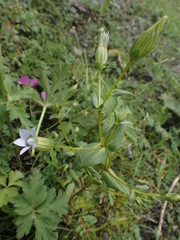 Comastoma pulmonarium
 Rhododendron ponticum