View: List Claim type Research area Organism Taxon as written Decade Paper Recommendation author interpretation original result basis n/a Claim · model-written summary
The authors recommend including plant fire response in fire ecosystem models.
including the plant fire response when modeling fire ecosystems e0 Verbatim
e0 “importance of including the plant fire response when modeling fire ecosystems ”
✓ located verbatim in the source · abstract, characters 1214–1291 Other claims from this paper (5) Intervention effect observed original result positive measured Claim · model-written summary
Fire elicited a greater germination response than smoke.
Verbatim
e0 “Fire resulted in greater response than smoke ”
✓ located verbatim in the source · abstract, characters 505–549 t0 “trees in response to fire and smoke ”
✓ located verbatim in the source · title, characters 43–78 Other claims from this paper (6) Observation observed original result positive measured Claim · model-written summary
Most legume species show fire tolerance or a positive response to fire in annually burned prairie.
positive response to fire e4 Verbatim
e4 “Most legume species are either fire tolerant or exhibit a positive response to fire ”
✓ located verbatim in the source · abstract, characters 1798–1881 Other claims from this paper (13) Association observed original result no effect measured Claim · model-written summary
Hypodiscus striatus showed no response to fire frequency.
fire frequency e0 response to fire frequency e0 Verbatim
e0 “Hypodiscus striatus , showing no response to fire frequency. ”
✓ located verbatim in the source · abstract, characters 632–692 Other claims from this paper (5) Association author interpretation original result measured Claim · model-written summary
The authors suggest fire duration may predict red heather response .
duration of fire e0 post-fire response e0 Not reported Direction
Verbatim
e0 “The duration of fire , rather than its presence or absence, may be an important character of the fire regime in predicting post- fire response of red heather ”
✓ located verbatim in the source · abstract, characters 679–834 Other claims from this paper (5) Observation observed original result measured Claim · model-written summary
All four fire - response types trace back more than 100 million years.
fire-response types e0 Not reported Taxon
Verbatim
e0 “All four fire - response types could be traced to >100 My ago (Mya) ”
✓ located verbatim in the source · abstract, characters 1133–1198 Other claims from this paper (17) Intervention effect observed original result measured Claim · model-written summary
Cornulaca alaschanica showed the opposite height response to fire from the other dominant species.
opposite response e0 Not reported Comparator Direction
Verbatim
e0 “Whereas, another dominant species Cornulaca alaschanica appeared opposite response to fire , which was probably related to different growth characteristics of desert plants. ”
✓ located verbatim in the source · abstract, characters 1090–1262 Other claims from this paper (7) Association observed original result significant (as stated) measured Claim · model-written summary
The species differed significantly in response to fire frequency.
fire frequency e0 response to fire frequency e0 Verbatim
e0 “significantly different trends in canopy cover and in response to fire frequency ”
✓ located verbatim in the source · abstract, characters 930–1010 t0 “Bracken ”
✓ located verbatim in the source · title, characters 30–37 Other claims from this paper (5) Association observed original result measured Claim · model-written summary
Vegetation response after fire depended on past fire frequency.
frequency of past fires e0 reaction of the vegetation after a fire e0 Not reported Direction
Verbatim
e0 “the reaction of the vegetation after a fire depends on the frequency of past fire s ”
✓ located verbatim in the source · abstract, characters 341–423 Other claims from this paper (3) Intervention effect observed original result no effect measured Claim · model-written summary
Fire had little effect on marsh seed banks and subsequent seedling response .
seed banks and subsequent seedling response e0 Not reported Taxon Comparator
Verbatim
e0 “Fire had little effect on seed banks and subsequent seedling response . ”
✓ located verbatim in the source · abstract, characters 665–735 Other claims from this paper (4) Lexical search (BM25). All words must match; if nothing does, any word. Organism names also match every spelling of the same organism. No semantic search yet.
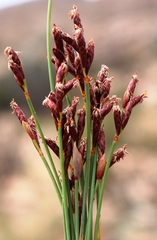 Hypodiscus striatus
 Pteridium aquilinum