Abstract
Blast, caused by Pyricularia oryzae, is the most important fungal disease of rice worldwide. This study aimed to compare root and foliar supply of soluble silicon (Si) on rice resistance to blast. The application of soluble Si to the roots increased Si concentration in leaf tissues as compare to plants grown in soil amended with calcium silicate. There was no increase in leaf Si concentration after soluble Si spray, regardless if the leaves were washed or not before analysis. X-ray microanalysis revealed that Si deposition was very similar on the leaf epidermis of plants sprayed with soluble Si, root amended with soluble Si or grown in soil amended with calcium silicate. The lesion size, the number of lesions per cm² of leaf and the area under blast progress curve were reduced for rice plants grown in soil that received the application of soluble Si or was amended with calcium silicate. The results of this study showed that the supply of soluble Si to the roots or its spray onto to the rice leaves can decrease blast symptoms.
Abstract from the paper’s OpenAlex record; open copy licensed cc-by-nc. Read at the source ↗
The text the model read, with the source record’s inline markup (italics, sub- and superscripts) rendered and its character entities decoded; quote offsets refer to the raw text.
Claims 11
Claim · model-written summary
Root supplied soluble silicon increased rice leaf silicon relative to calcium silicate soil amendment.
- Taxon
- rice
 Oryza sativat0
- Treatment
- application of soluble Si to the rootse0
- Outcome
- Si concentration in leaf tissuese0
- Direction
- increasede0
- Comparator
- plants grown in soil amended with calcium silicatee0
Organisms pictured · Representative pictures of the matched species, not figures from the paper.

Verbatim
e0“The application of soluble Si to the roots increased Si concentration in leaf tissues as compare to plants grown in soil amended with calcium silicate.”
t0“in rice”
Claim · model-written summary
Foliar soluble silicon spray did not increase rice leaf silicon concentration.
- Taxon
- riceOryza sativat0
- Treatment
- soluble Si spraye0
- Outcome
- leaf Si concentratione0
- Direction
- no increasee0
- Qualifier
- regardless if the leaves were washed or not before analysise0
Not reportedComparator
Organisms pictured · Representative pictures of the matched species, not figures from the paper.
Verbatim
e0“There was no increase in leaf Si concentration after soluble Si spray, regardless if the leaves were washed or not before analysis.”
t0“rice”
Claim · model-written summary
Leaf epidermal silicon deposition was very similar across sprayed, root supplied, and calcium silicate amended rice plants.
- Taxon
- riceOryza sativat0
- Organ / stage
- leaf epidermise0
- Treatment
- plants sprayed with soluble Si, root amended with soluble Si or grown in soil amended with calcium silicatee0
- Outcome
- Si depositione0
- Direction
- very similare0
Organisms pictured · Representative pictures of the matched species, not figures from the paper.
Verbatim
e0“X-ray microanalysis revealed that Si deposition was very similar on the leaf epidermis of plants sprayed with soluble Si, root amended with soluble Si or grown in soil amended with calcium silicate.”
t0“in rice”
Claim · model-written summary
Soluble silicon in soil reduced rice blast lesion size.
- Taxon
- riceOryza sativae0
- Treatment
- application of soluble Sie0
- Interactor
- Pyricularia oryzae
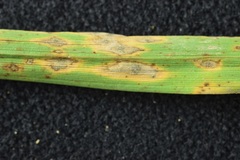 Pyricularia oryzaet0pathogen
- Outcome
- lesion sizee0
- Direction
- reducede0
Not reportedComparator
Organisms pictured · Representative pictures of the matched species, not figures from the paper.
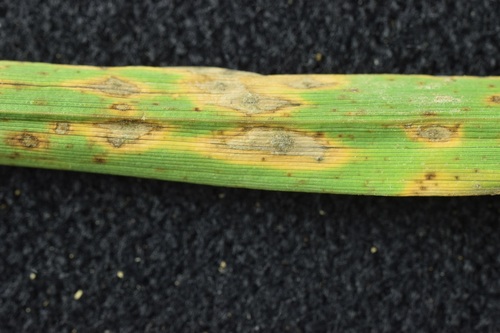
Verbatim
e0“The lesion size, the number of lesions per cm² of leaf and the area under blast progress curve were reduced for rice plants grown in soil that received the application of soluble Si or was amended with calcium silicate.”
t0“caused by Pyricularia oryzae”
Claim · model-written summary
Soluble silicon in soil reduced rice blast lesion density.
- Taxon
- riceOryza sativae0
- Treatment
- application of soluble Sie0
- Outcome
- number of lesions per cm² of leafe0
- Direction
- reducede0
Not reportedComparator
Organisms pictured · Representative pictures of the matched species, not figures from the paper.
Verbatim
e0“The lesion size, the number of lesions per cm² of leaf and the area under blast progress curve were reduced for rice plants grown in soil that received the application of soluble Si or was amended with calcium silicate.”
Claim · model-written summary
Soluble silicon in soil reduced the area under the rice blast progress curve.
- Taxon
- riceOryza sativae0
- Treatment
- application of soluble Sie0
- Outcome
- area under blast progress curvee0
- Direction
- reducede0
Not reportedComparator
Organisms pictured · Representative pictures of the matched species, not figures from the paper.
Verbatim
e0“The lesion size, the number of lesions per cm² of leaf and the area under blast progress curve were reduced for rice plants grown in soil that received the application of soluble Si or was amended with calcium silicate.”
Claim · model-written summary
Calcium silicate soil amendment reduced rice blast lesion size.
- Taxon
- riceOryza sativae0
- Treatment
- calcium silicatee0
- Outcome
- lesion sizee0
- Direction
- reducede0
Not reportedComparator
Organisms pictured · Representative pictures of the matched species, not figures from the paper.
Verbatim
e0“The lesion size, the number of lesions per cm² of leaf and the area under blast progress curve were reduced for rice plants grown in soil that received the application of soluble Si or was amended with calcium silicate.”
Claim · model-written summary
Calcium silicate soil amendment reduced rice blast lesion density.
- Taxon
- riceOryza sativae0
- Treatment
- calcium silicatee0
- Outcome
- number of lesions per cm² of leafe0
- Direction
- reducede0
Not reportedComparator
Organisms pictured · Representative pictures of the matched species, not figures from the paper.
Verbatim
e0“The lesion size, the number of lesions per cm² of leaf and the area under blast progress curve were reduced for rice plants grown in soil that received the application of soluble Si or was amended with calcium silicate.”
Claim · model-written summary
Calcium silicate soil amendment reduced the area under the rice blast progress curve.
- Taxon
- riceOryza sativae0
- Treatment
- calcium silicatee0
- Outcome
- area under blast progress curvee0
- Direction
- reducede0
Not reportedComparator
Organisms pictured · Representative pictures of the matched species, not figures from the paper.
Verbatim
e0“The lesion size, the number of lesions per cm² of leaf and the area under blast progress curve were reduced for rice plants grown in soil that received the application of soluble Si or was amended with calcium silicate.”
Claim · model-written summary
Root supplied soluble silicon decreased rice blast symptoms.
- Taxon
- riceOryza sativat0
- Treatment
- supply of soluble Si to the rootse0
- Outcome
- blast symptomse0
- Direction
- decreasee0
Not reportedComparator
Organisms pictured · Representative pictures of the matched species, not figures from the paper.
Verbatim
e0“the supply of soluble Si to the roots or its spray onto to the rice leaves can decrease blast symptoms.”
t0“rice”
Claim · model-written summary
Foliar soluble silicon spray decreased rice blast symptoms.
- Taxon
- riceOryza sativae0
- Treatment
- spray onto to the rice leavese0
- Outcome
- blast symptomse0
- Direction
- decreasee0
Not reportedComparator
Organisms pictured · Representative pictures of the matched species, not figures from the paper.
Verbatim
e0“the supply of soluble Si to the roots or its spray onto to the rice leaves can decrease blast symptoms.”
The same questions in other papers
silicon atom · nutrient: content · Oryza sativa (rice)Results differ
163 papers in the same direction as this paper · 13 in the opposite direction
- no effect
- no effect
- no effect
173 papers more in this group
See all 177 papers →silicon atom · Pyricularia oryzae · Oryza sativa (rice)Positive and negative results
9 papers in the same direction as this paper · 1 in the opposite direction
- negative
- positive
- positive
7 papers more in this group
See all 11 papers →silicon atom · disease · Oryza sativa (rice)Positive and negative results
68 papers in the same direction as this paper · 3 in the opposite direction · 2 reporting no difference from an alternative
- positive
- positive
- positive
70 papers more in this group
See all 74 papers →calcium silicate · disease · Oryza sativa (rice)Results agree
4 papers in the same direction as this paper
- positive
- positive
- positive
1 paper more in this group
See all 5 papers →application · disease · Oryza sativa (rice)Positive and negative results
154 papers in the same direction as this paper · 16 in the opposite direction
- negative
- negative
- no effect
167 papers more in this group
See all 171 papers →application · nutrient: content · Oryza sativa (rice)Positive and negative results
9 papers in the same direction as this paper · 212 in the opposite direction
- positive
- positive
- positive
218 papers more in this group
See all 222 papers →Claims are grouped by organism, treatment and what was measured or targeted. A paper counts as positive when any of its claims in the group is positive.