View: List Claim type Research area Organism Taxon as written Decade Paper A claim can belong to several research areas, so group counts add up to more than the total.
Intervention effect observed original result measured Claim · model-written summary
The magnitude of crude fibre decrease was greater in the presence of Mg.
in the presence of Mg e1 magnitude of decrease e1 Not reported Comparator
Verbatim
e0 “using okra (Abelmoschus esculentus Moench) as the test crop ”
✓ located verbatim in the source · abstract, characters 176–235 e1 “The magnitude of decrease was increased in the presence of Mg ”
✓ located verbatim in the source · abstract, characters 1240–1301 Other claims from this paper (16) Intervention effect observed original result measured Claim · model-written summary
2-4-Dinitrophenol (DNP), sodium azide, and vanadate markedly reduced the rapidity and the magnitude of voltage decrease accompanying increases in concentration of K+, Na+, or Mg++
2-4-Dinitrophenol (DNP), sodium azide, and vanadate e0 rapidity and the magnitude of voltage decrease e0 Not reported Organ / stage Comparator
Verbatim
t0 “Avicennia germinans
✓ located verbatim in the source · title, characters 40–59 e0 “2-4-Dinitrophenol (DNP), sodium azide, and vanadate markedly reduced the rapidity and the magnitude of voltage decrease accompanying increases in concentration of K+, Na+, or Mg++ ”
✓ located verbatim in the source · abstract, characters 1118–1297 Other claims from this paper (11) Intervention effect observed original result measured Claim · model-written summary
Increasing the pH of the incubation medium from 5.5 to 7.0 reduced both the rate and the magnitude of voltage decrease when Na+ concentration was changed
pH of the incubation medium from 5.5 to 7.0 e0 rate and the magnitude of voltage decrease e0 Not reported Organ / stage Comparator
Verbatim
t0 “Avicennia germinans
✓ located verbatim in the source · title, characters 40–59 e0 “Increasing the pH of the incubation medium from 5.5 to 7.0 reduced both the rate and the magnitude of voltage decrease when Na+ concentration was changed ”
✓ located verbatim in the source · abstract, characters 370–523 Other claims from this paper (11) Intervention effect observed original result negative measured Claim · model-written summary
Reducing the spray volume below 10 ml. per square yard produced a progressive decrease in the magnitude of response on kidney-bean plants.
reduced below 10 ml. per square yard e2 magnitude of response e2 progressive decrease e2 Not reported Comparator
Verbatim
e1 “Aqueous sprays, containing a constant threshold amount of the ammonium salt of 2,4-dichlorophenoxyacetic acid, were found to be most effective at a volume rate of 10-20 ml. per square yard when applied to young kidney-bean plants ”
✓ located verbatim in the source · abstract, characters 222–451 e2 “Rates of 40-100 ml. per square yard were less effective, and there was a progressive decrease in magnitude of response as the volume was reduced below 10 ml. per square yard ”
✓ located verbatim in the source · abstract, characters 453–626 Other claims from this paper (10) Intervention effect observed original result measured Claim · model-written summary
K fertilizer decrease d Mg concentrations, with the decrease inconsistent across harvests.
Application of K fertilizer e2 concentrations of Mg e2 the magnitude of the decrease was not consistent across harvests e2 Not reported Comparator
Verbatim
e0 “tall fescue (Festuca arundinacea Schreb) ”
✓ located verbatim in the source · abstract, characters 278–318 e2 “Application of K fertilizer decrease d concentrations of Mg, but the magnitude of the decrease was not consistent across harvests ”
✓ located verbatim in the source · abstract, characters 600–728 Other claims from this paper (19) Intervention effect observed original result measured Claim · model-written summary
Adding organic sources caused a greater soil pH decrease .
organic sources were applied along with chemical fertilizers e0 magnitude of de crease e0 Not reported Comparator
Verbatim
e0 “the magnitude of de crease was more when organic sources were applied along with chemical fertilizers. ”
✓ located verbatim in the source · abstract, characters 1309–1411 t0 “sugarcane ”
✓ located verbatim in the source · title, characters 47–56 Other claims from this paper (13) Intervention effect observed original result measured Claim · model-written summary
2-4-Dinitrophenol (DNP), sodium azide, and vanadate markedly reduced the rapidity and the magnitude of voltage decrease accompanying increases in concentration of K+, Na+, or Mg++
2-4-Dinitrophenol (DNP), sodium azide, and vanadate e0 rapidity and the magnitude of voltage decrease e0 Not reported Organ / stage Comparator
Verbatim
t0 “Avicennia germinans
✓ located verbatim in the source · title, characters 40–59 e0 “2-4-Dinitrophenol (DNP), sodium azide, and vanadate markedly reduced the rapidity and the magnitude of voltage decrease accompanying increases in concentration of K+, Na+, or Mg++ ”
✓ located verbatim in the source · abstract, characters 1118–1297 Other claims from this paper (11) Intervention effect observed original result measured Claim · model-written summary
Increasing the pH of the incubation medium from 5.5 to 7.0 reduced both the rate and the magnitude of voltage decrease when Na+ concentration was changed
pH of the incubation medium from 5.5 to 7.0 e0 rate and the magnitude of voltage decrease e0 Not reported Organ / stage Comparator
Verbatim
t0 “Avicennia germinans
✓ located verbatim in the source · title, characters 40–59 e0 “Increasing the pH of the incubation medium from 5.5 to 7.0 reduced both the rate and the magnitude of voltage decrease when Na+ concentration was changed ”
✓ located verbatim in the source · abstract, characters 370–523 Other claims from this paper (11) Intervention effect observed original result positive measured Claim · model-written summary
Phage pretreatment lowered the pear fire blight pathogen titre by 1–3 orders of magnitude .
treatment with a bacteriophage 1 h before infection with the pathogen e1 titer of the pathogen e1 1–3 orders of magnitude e1 inoculum of 106 –108 CFU/mL e1 Not reported Comparator
Verbatim
e0 “pear flowers and leaves ”
✓ located verbatim in the source · abstract, characters 150–173 e1 “a decrease in the titer of the pathogen by 1–3 orders of magnitude was shown with E. amylovora in the inoculum of 106 –108 CFU/mL and treatment with a bacteriophage 1 h before infection with the pathogen. ”
✓ located verbatim in the source · abstract, characters 356–560 Other claims from this paper (1) Intervention effect observed original result measured Claim · model-written summary
LHY and CCA1 expression magnitude decrease d in the ANAC017 overexpression line.
ANAC017-overexpressing line e0 magnitude of LHY and CCA1 expression e0 Not reported Comparator
Verbatim
e0 “a decrease in the magnitude of LHY and CCA1 expression in an ANAC017-overexpressing line and protein–protein interaction between ANAC017 and PIF4 ”
✓ located verbatim in the source · abstract, characters 945–1090 t0 “in Arabidopsis plants treated with myxothiazol ”
✓ located verbatim in the source · abstract, characters 524–570 Other claims from this paper (9) Intervention effect observed original result measured Claim · model-written summary
Plant height of oat generally decrease d under increasing mutagen doses.
increasing agent doses e1 Not reported Comparator
Verbatim
e0 “compare the magnitude of genetic variability generated in hexaploid oat genotypes treated with two mutagenic agents ”
✓ located verbatim in the source · abstract, characters 37–152 e1 “In general, data pointed to a decrease in the trait plant height under increasing agent doses ”
✓ located verbatim in the source · abstract, characters 613–706 Other claims from this paper (5) Intervention effect observed original result negative measured Claim · model-written summary
Both w2 alleles decrease d most chloroplast RNAs, with deficiencies roughly paralleling DNA deficiency.
most chloroplast RNAs e0 roughly paralleling that of the DNA deficiency e0 Not reported Comparator
Verbatim
e0 “Both alleles condition a decrease in most chloroplast RNAs, with the magnitude of the RNA deficiencies roughly paralleling that of the DNA deficiency. ”
✓ located verbatim in the source · abstract, characters 638–788 e1 “a nuclear gene in maize (Zea mays ), white2 (w2) ”
✓ located verbatim in the source · abstract, characters 307–354 Other claims from this paper (10) Intervention effect observed original result positive measured Claim · model-written summary
Phage pretreatment lowered the pear fire blight pathogen titre by 1–3 orders of magnitude .
treatment with a bacteriophage 1 h before infection with the pathogen e1 titer of the pathogen e1 1–3 orders of magnitude e1 inoculum of 106 –108 CFU/mL e1 Not reported Comparator
Verbatim
e0 “pear flowers and leaves ”
✓ located verbatim in the source · abstract, characters 150–173 e1 “a decrease in the titer of the pathogen by 1–3 orders of magnitude was shown with E. amylovora in the inoculum of 106 –108 CFU/mL and treatment with a bacteriophage 1 h before infection with the pathogen. ”
✓ located verbatim in the source · abstract, characters 356–560 Other claims from this paper (1) Intervention effect observed original result measured Claim · model-written summary
Inbreeding depression tended to be smaller under robbing than under netting.
robbing conditions e1 the magnitude of ID e1 Verbatim
e0 “Comastoma pulmonarium produced seeds via selfing at the study site
✓ located verbatim in the source · abstract, characters 490–556 e1 “in comparison with netting, the magnitude of ID under robbing conditions tended to decrease ”
✓ located verbatim in the source · abstract, characters 816–907 Other claims from this paper (6) Intervention effect observed original result negative measured Claim · model-written summary
Drought reduced soil fungal biomass and diversity relative to irrigated controls in mesocosms.
severe summer drought e2 soil fungal biomass and diversity e1 decrease inferred e1 irrigated controls e2 Verbatim
e1 “We show that drought has an direct negative effect on soil fungal biomass and diversity and that the magnitude of the effect depended on the initial community in soils ”
✓ located verbatim in the source · abstract, characters 694–861 e2 “In a fully factorial design, half of the mesocosms were subjected to severe summer drought while half served as irrigated controls ”
✓ located verbatim in the source · abstract, characters 331–461 e4 “the effects of drought legacy are apparent as reduction of crop yield in recovery period and slower decomposition rate 6 months after the drought ”
✓ located verbatim in the source · abstract, characters 1205–1350 Other claims from this paper (9) Intervention effect observed original result measured Claim · model-written summary
Inbreeding depression tended to be smaller under robbing than under netting.
robbing conditions e1 the magnitude of ID e1 Verbatim
e0 “Comastoma pulmonarium produced seeds via selfing at the study site
✓ located verbatim in the source · abstract, characters 490–556 e1 “in comparison with netting, the magnitude of ID under robbing conditions tended to decrease ”
✓ located verbatim in the source · abstract, characters 816–907 Other claims from this paper (6) Intervention effect observed original result negative measured Claim · model-written summary
Removing plant functional types decrease d net ecosystem CO2 exchange, with variation among microhabitats and types.
Plant functional types t0 removal of PFTs e0 Not reported Comparator
Verbatim
e0 “The removal of PFTs caused a decrease of NEE, but the rate differed between microhabitats (i.e., hummocks and lawns) and the type of PFTs. ”
✓ located verbatim in the source · abstract, characters 367–505 t0 “Plant functional types ”
✓ located verbatim in the source · title, characters 0–22 Other claims from this paper (5) Lexical search (BM25). All words must match; if nothing does, any word. Organism names also match every spelling of the same organism. No semantic search yet.
 Abelmoschus esculentuse0
 Avicennia germinans
 Phaseolus vulgaris
 Lolium arundinaceum
 Pyrus communis
 Erwinia amylovora
 Arabidopsis
 Avena sativa
 Zea mays
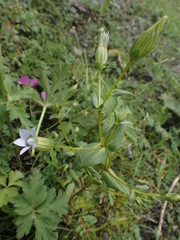 Comastoma pulmonarium