View: List Claim type Research area Organism Taxon as written Decade Paper Observation observed original result measured Claim · model-written summary
Aggressive C. sativus isolates released more xylanase than weakly aggressive isolates .
weakly aggressive isolates e0 Verbatim
e0 “Aggressive isolates released more xylanase of weakly aggressive isolates . ”
✓ located verbatim in the source · abstract, characters 499–572 t0 “Cochliobolus sativus
✓ located verbatim in the source · title, characters 24–44 Other claims from this paper (4) Observation observed original result measured Claim · model-written summary
Canker isolates were as aggressive as leaf isolates .
as aggressive as leaf isolates e0 leaf isolates e0 Not reported Taxon
Verbatim
e0 “Canker isolates were found to be as aggressive as leaf isolates . ”
✓ located verbatim in the source · abstract, characters 753–817 Other claims from this paper (3) Observation observed original result measured Claim · model-written summary
Highly aggressive cotton V. dahliae isolates secreted more proteins than weakly aggressive ones.
isolates e0 pathogen isolates secreted more proteins e0 weakly aggressive ones e0 Verbatim
e0 “Highly aggressive isolates secreted more proteins than the weakly aggressive ones ”
✓ located verbatim in the source · abstract, characters 1410–1491 e1 “on cotton in Henan ”
✓ located verbatim in the source · abstract, characters 75–93 Other claims from this paper (9) Association observed original result measured Claim · model-written summary
Aggressive isolates were less compatible with other isolates .
Aggressive isolates e0 Sclerotinia sclerotium e1 pathogen compatible with other isolates e0 Verbatim
e0 “Aggressive isolates were less compatible with other isolates ”
✓ located verbatim in the source · abstract, characters 948–1008 e1 “Sclerotinia sclerotium associated with stem rot of chickpea ”
✓ located verbatim in the source · abstract, characters 32–91 Other claims from this paper (8) Association observed original result measured Claim · model-written summary
Isolates from sunflower plants were more aggressive than isolates from soybean.
more aggressive e0 those collected from soybean e0 Verbatim
e0 “isolates collected from sunflower plants were more aggressive than those collected from soybean ”
✓ located verbatim in the source · abstract, characters 1118–1213 Other claims from this paper (13) Association observed original result measured Claim · model-written summary
Sclerotinia sclerotiorum isolates from crop hosts were more aggressive than isolates from wild buttercup.
more aggressive e2 wild buttercup e2 Verbatim
t0 “Brassica napus
✓ located verbatim in the source · title, characters 75–89 e2 “Sclerotinia sclerotiorum isolates from crop hosts were more aggressive than those from wild buttercup ”
✓ located verbatim in the source · abstract, characters 666–767 Other claims from this paper (7) Intervention effect observed original result negative significant (as stated) measured Claim · model-written summary
Cucumber-derived Pythium isolates were significantly more aggressive on cucumber than tomato-derived isolates .
isolates of P. irregulare from cucumber e0 more aggressive e0 tomato isolates e0 Verbatim
e0 “isolates of P. irregulare from cucumber, which were significantly more aggressive than tomato isolates ”
✓ located verbatim in the source · abstract, characters 820–922 Other claims from this paper (7) Intervention effect observed original result negative measured Claim · model-written summary
Highly aggressive isolates caused higher seedling necrosis than low-aggression isolates .
high aggressive isolates e0 symptom severity on wheat seedlings, as measured by percentage necrosis e0 low aggressive isolates e0 Verbatim
e0 “The high aggressive isolates consistently produced higher symptom severity on wheat seedlings, as measured by percentage necrosis, than low aggressive isolates . ”
✓ located verbatim in the source · abstract, characters 799–959 t0 “Stagonospora nodorum
✓ located verbatim in the source · title, characters 18–38 Other claims from this paper (9) Intervention effect observed original result negative measured Claim · model-written summary
Isolates from continuously cropped wheat were more aggressive on wheat than isolates from commercial fields.
Isolates from the continuous-cropped wheat plot e0 more aggressive e0 isolates from commercial fields e0 Verbatim
e0 “Isolates from the continuous-cropped wheat plot were more aggressive on average than were isolates from commercial fields. ”
✓ located verbatim in the source · abstract, characters 376–498 t0 “WHEAT ON AGGRESSIVE NESS OF Cochliobolus sativus ”
✓ located verbatim in the source · title, characters 50–97 Other claims from this paper (1) Recommendation author interpretation original result positive basis n/a Claim · model-written summary
Screening wheat for FHB resistance requires aggressive isolates or a mixture of isolates .
use of aggressive fungal isolates or a mixture of several isolates e0 Verbatim
e0 “screening for wheat resistance to FHB requires the use of aggressive fungal isolates or a mixture of several isolates ”
✓ located verbatim in the source · abstract, characters 1498–1615 Other claims from this paper (6) Recommendation author interpretation original result basis n/a Claim · model-written summary
The most aggressive Sclerotinia isolates can be selected for resistance breeding.
Sclerotinia isolatese1 pathogen most aggressive isolates can be selected for resistance breeding e0 Verbatim
e0 “Based on these results, the most aggressive isolates can be selected for resistance breeding. ”
✓ located verbatim in the source · abstract, characters 1046–1139 e1 “Sclerotinia isolates isolated from red clover crops ”
✓ located verbatim in the source · abstract, characters 360–411 e2 “the disease index was calculated ”
✓ located verbatim in the source · abstract, characters 754–786 Other claims from this paper (4) Recommendation author interpretation original result basis n/a Claim · model-written summary
Screening for resistance to head blight requires aggressive isolates or a mixture of several isolates .
screening for resistance to FHB e5 aggressive isolates or a mixture of several isolates e5 Verbatim
t0 “Pathogenicity of Fusarium species causing head blight in barley ”
✓ located verbatim in the source · title, characters 0–63 e5 “suggesting that screening for resistance to FHB requires the use of aggressive isolates or a mixture of several isolates ”
✓ located verbatim in the source · abstract, characters 1115–1235 Other claims from this paper (7) Method / resource observed original result positive measured Claim · model-written summary
Molecular techniques distinguished aggressive from non- aggressive isolates .
aggressive and non-aggressive isolates of L. maculans e0 Verbatim
e0 “These aggressive and non- aggressive isolates of L. maculans can be distinguished by molecular techniques including electrophoretic karyotyping, Southern analysis of the ribosomal RNA gene repeat, Random Amplified Polymorphic DNA (RAPD) marker analysis, and pigment production ”
✓ located verbatim in the source · abstract, characters 369–644 t0 “oilseed rape (Brassica napus ) ”
✓ located verbatim in the source · abstract, characters 103–132 Other claims from this paper (2) Method / resource observed original result measured Claim · model-written summary
The study identified aggressive isolates that distinguished bean lines more efficiently.
more efficient in distinguishing the lines e0 the most aggressive isolates e0 Verbatim
e0 “It was also possible to identify the most aggressive isolates that were more efficient in distinguishing the lines ”
✓ located verbatim in the source · abstract, characters 1376–1490 e1 “common bean (Phaseolus vulgaris ) lines ”
✓ located verbatim in the source · abstract, characters 390–428 e2 “Sclerotinia sclerotiorum isolates ”
✓ located verbatim in the source · abstract, characters 121–154 Other claims from this paper (4) Method / resource observed original result positive measured Claim · model-written summary
The aggressive -group primer pair unequivocally identifies A- isolates of Leptosphaeria maculans among 97 isolates tested.
identifies A‐isolates e1 Verbatim
e0 “Polymerase chain reaction (PCR) primers, specific for the aggressive pathogenicity group of the rape seed pathogen Leptosphaeria maculans ”
✓ located verbatim in the source · abstract, characters 9–146 e1 “The primer pair specific for the aggressive pathogenicity group unequivocally identifies A‐ isolates ”
✓ located verbatim in the source · abstract, characters 755–854 e2 “tested on 97 isolates of L. maculans belonging to different pathogenicity groups ”
✓ located verbatim in the source · abstract, characters 673–753 Other claims from this paper (5) Mechanism author interpretation original result negative measured Claim · model-written summary
The authors propose that hydroxycinnamate accumulation after weak isolate priming could explain restricted symptom development from later highly aggressive isolates .
priming with a weakly aggressive isolate e0 restricted development of further inoculated highly aggressive isolates e0 Verbatim
e0 “their detected amounts in response to the priming with a weakly aggressive isolate could explain the restricted development of further inoculated highly aggressive isolates ”
✓ located verbatim in the source · abstract, characters 1371–1543 t0 “canola ”
✓ located verbatim in the source · title, characters 8–14 Other claims from this paper (1) Mechanism hypothesis original result measured Claim · model-written summary
Progeny from aggressive parents may acquire greater aggressive ness through recombination.
increased aggressiveness e0 due to recombination e0 Verbatim
e0 “progeny of highly aggressive parents might exhibit increased aggressive ness due to recombination ”
✓ located verbatim in the source · abstract, characters 1231–1327 e1 “wheat (Triticum aestivum ) ”
✓ located verbatim in the source · abstract, characters 107–132 Other claims from this paper (8) Mechanism author interpretation original result negative measured Claim · model-written summary
Authors attribute infection of younger palms to isolates with higher aggressive ness.
isolates e0 pathogen e1 infection within younger palms e0 higher aggressive spectrum of the isolates e0 Verbatim
e0 “infection within younger palms in the field was due to a higher aggressive spectrum of the isolates ”
✓ located verbatim in the source · abstract, characters 1539–1638 e1 “the G. boninense isolates sampled across Peninsular Malaysia ”
✓ located verbatim in the source · abstract, characters 432–492 Other claims from this paper (9) Lexical search (BM25). All words must match; if nothing does, any word. Organism names also match every spelling of the same organism. No semantic search yet.
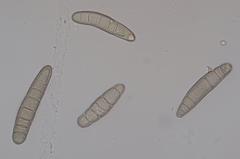 Bipolaris sorokinianat0
 Gossypium hirsutum
 Cicer arietinum
 Helianthus annuus
 Brassica napus
 Sclerotinia sclerotiorum
 Cucumis sativus
 Triticum aestivum
 Parastagonospora nodorum
 Trifolium pratense
 Hordeum vulgare
 Plenodomus lingam
 Phaseolus vulgaris
 Brassica napus var. napus