View: List Claim type Research area Organism Taxon as written Decade Paper A claim can belong to several research areas, so group counts add up to more than the total.
Organism groups follow NCBI Taxonomy: the spellings of one organism are merged, a claim naming several organisms sits in each group, and claims whose value names no organism are under “not stated”.
not stated 95 Intervention effect observed original result no effect measured Claim · model-written summary
Heteroauxin was ineffective for parthenocarpy in maxima .
not effective to maxima spe-cies e0 Not reported Comparator Direction
Verbatim
e0 “Heteroauxin was effective to Pepo and mos-chata species, but was not effective to maxima spe-cies ”
✓ located verbatim in the source · abstract, characters 120–217 Other claims from this paper (6) Intervention effect observed original result no effect measured Claim · model-written summary
Low temperature did not delay climacteric maxima .
lowtemperature e0 attainment oftheclimacteric maxima e0 no_change inferred e0 Not reported Comparator
Verbatim
e0 “butlowtemperature didnotdelay attainment oftheclimacteric maxima ”
✓ located verbatim in the source · abstract, characters 324–388 t0 “TomatoFruits ”
✓ located verbatim in the source · title, characters 93–105 Other claims from this paper (4) Observation observed original result no effect measured Claim · model-written summary
The emission spectrum maxima did not change during induction in photosynthetically active green leaves.
photosynthetically active green leaves e0 maxima of the emission spectrum e0 does not change e0 Not reported Taxon
Verbatim
e0 “During the Kautsky in duction kinetic of photosynthetically active green leaves, the maxima of the emission spectrum does not change. ”
✓ located verbatim in the source · abstract, characters 426–560 Other claims from this paper (6) Method / resource observed original result no effect measured Claim · model-written summary
Two-day radicle emission did not distinguish Cucurbita maxima lots.
Verbatim
e0 “In the test of earliness of rdicle emission at two days, there was no difference between lots of Cucurbita maxima
✓ located verbatim in the source · abstract, characters 700–813 Other claims from this paper (3) Observation observed original result no effect measured Claim · model-written summary
The seed oil composition of the Chilean giant pumpkin is similar to that of other Cucurbita maxima cultivated in South America and Europe.
seed oil composition e2 other C. maxima cultivated in South America and Europe e2 Verbatim
e2 “The seed oil composition of the Chilean giant pumpkin is like that of other C. maxima cultivated in South America and Europe ”
✓ located verbatim in the source · abstract, characters 1039–1163 e4 “the Chilean giant pumpkin ( Cucurbita maxima ) ”
✓ located verbatim in the source · abstract, characters 64–110 Other claims from this paper (4) Observation observed original result no effect measured Claim · model-written summary
Yields and yield components of C. maxima cultivar Prizewinner were similar at all four sites.
yields and yield components e4 Verbatim
e4 “the yields and yield components of the C. maxima cultivar Prizewinner were similar at all four sites ”
✓ located verbatim in the source · abstract, characters 1177–1277 Other claims from this paper (7) Intervention effect observed original result no effect measured Claim · model-written summary
Fe3+ foliar spray had an inconsequential effect on Citrus maxima growth.
inconsequential e2 via foliar spray e2 Not reported Comparator
Verbatim
t0 “with Citrus maxima leaves ”
✓ located verbatim in the source · title, characters 37–62 e2 “both γ-Fe 2 O 3 NPs and Fe 3+ exposure via foliar spray had an inconsequential effect on plant growth ”
✓ located verbatim in the source · abstract, characters 1464–1565 Other claims from this paper (18) Intervention effect observed original result no effect measured Claim · model-written summary
γ-Fe2O3 NPs foliar spray had an inconsequential effect on Citrus maxima growth.
γ-Fe 2 O 3 NPs e2 inconsequential e2 via foliar spray e2 Not reported Comparator
Verbatim
t0 “with Citrus maxima leaves ”
✓ located verbatim in the source · title, characters 37–62 e2 “both γ-Fe 2 O 3 NPs and Fe 3+ exposure via foliar spray had an inconsequential effect on plant growth ”
✓ located verbatim in the source · abstract, characters 1464–1565 Other claims from this paper (18) Observation observed original result no effect not significant (as stated) measured Claim · model-written summary
C. maxima showed no significant fluorescence differences until month 12 after exposure.
significant differences e0 until the 12th month from infection exposure e0 Not reported Direction
Verbatim
e0 “C. maxima plants, on the other hand, did not show significant differences until the 12th month from infection exposure ”
✓ located verbatim in the source · abstract, characters 1397–1515 Other claims from this paper (10) Intervention effect observed original result no effect measured Claim · model-written summary
Grafting did not change mean fruit weight, fruit shape or rind thickness of watermelon.
mean fruit weight, fruit shape, and rind thickness e6 no_change inferred e6 Not reported Comparator
Verbatim
e0 “the effect of grafting of watermelon hybrids 'Obla F-1' and 'Vanessa F-1' on to Cucurbita maxima x Cucurbita moschata rootstock TZ 148 ”
✓ located verbatim in the source · abstract, characters 44–178 e6 “No differences were observed for mean fruit weight, fruit shape, and rind thickness ”
✓ located verbatim in the source · abstract, characters 669–752 Other claims from this paper (10) Intervention effect observed original result no effect not significant (as stated) measured Claim · model-written summary
Sugar content did not differ between grafted and ungrafted watermelon plants, except in Obla F-1 hybrids.
no_change inferred e7 except in the case of 'Obla F-1' hybrids e7 ungrafted plants e7 Verbatim
e0 “the effect of grafting of watermelon hybrids 'Obla F-1' and 'Vanessa F-1' on to Cucurbita maxima x Cucurbita moschata rootstock TZ 148 ”
✓ located verbatim in the source · abstract, characters 44–178 e7 “With regards to sugar content, no significant differences between grafted and ungrafted plants were observed, except in the case of 'Obla F-1' hybrids ”
✓ located verbatim in the source · abstract, characters 936–1086 Other claims from this paper (10) Intervention effect observed original result no effect measured Claim · model-written summary
Mulch type did not alter verticillium wilt AUDPC.
Not reported Comparator
Verbatim
e0 “watermelon ( Citrullus lanatus ), especially when plants are under biotic and/or abiotic stress. A 2-year field study was conducted to evaluate the combination of four different rootstocks and two types of plastic mulch (black and clear) on date of watermelon first flowering, fruit ripening, yield, and fruit quality when plants were exposed to Verticillium dahliae . Seedless watermelon cv. Secretariat was grafted ont… ” Show full quote
✓ located verbatim in the source · abstract, characters 100–1054 Other claims from this paper (14) Association author interpretation original result no effect measured Claim · model-written summary
With nitrate available, G. maxima probably did not affect dominant community composition and nitrate metabolism.
composition and nitrate metabolism of the dominant nitrate-reducing community e0 when nitrate was present and available e0 Verbatim
e0 “when nitrate was present and available, the composition and nitrate metabolism of the dominant nitrate-reducing community was probably not affected by G. maxima . ”
✓ located verbatim in the source · abstract, characters 1183–1344 t0 “Glyceria maxima
✓ located verbatim in the source · title, characters 17–32 Other claims from this paper (5) Intervention effect observed original result no effect measured Claim · model-written summary
Cold stratification (4 °C) did not enhance seed germination of G. maxima (0.5%).
Cold stratification (4 °C) e2 seed germination e2 did not enhance e2 Not reported Comparator
Verbatim
e2 “Cold stratification (4 °C) and dry storage of seeds at ambient room temperature for eight weeks did not enhance G. maxima seed germination (means: 0.5% and 2.5%, respectively) ”
✓ located verbatim in the source · abstract, characters 589–764 Other claims from this paper (6) Intervention effect observed original result no effect measured Claim · model-written summary
Dry storage of seeds at ambient room temperature for eight weeks did not enhance seed germination of G. maxima (2.5%).
dry storage of seeds at ambient room temperature for eight weeks e2 seed germination e2 did not enhance e2 Not reported Comparator
Verbatim
e2 “Cold stratification (4 °C) and dry storage of seeds at ambient room temperature for eight weeks did not enhance G. maxima seed germination (means: 0.5% and 2.5%, respectively) ”
✓ located verbatim in the source · abstract, characters 589–764 Other claims from this paper (6) Intervention effect observed original result no effect not significant (as stated) measured Claim · model-written summary
C1 did not significantly affect tomato leaf growth.
did not significantly impact e0 Not reported Comparator
Verbatim
e0 “For tomato plants, the application of C1 resulted in a slight increase in photosynthesis, but it did not significantly impact leaf growth. ”
✓ located verbatim in the source · abstract, characters 806–944 Other claims from this paper (6) Intervention effect observed original result no effect measured Claim · model-written summary
Ecklonia product did not reduce egg hatch.
Percentage hatch e1 distilled water (DW) e0 Verbatim
e0 “but not with Em compared with distilled water (DW) control treatment ”
✓ located verbatim in the source · abstract, characters 735–803 e1 “Percentage hatch from egg masses ”
✓ located verbatim in the source · abstract, characters 547–579 e2 “tomato plants (Solanum lycopersicum cv. Moneymaker) ”
✓ located verbatim in the source · abstract, characters 246–297 Other claims from this paper (9) Intervention effect observed original result no effect measured Claim · model-written summary
WSP treatment alone and with the pathogen gave a spectral profile of tomato roots similar to the control.
spectral profile e5 Verbatim
t0 “growth promoter of tomato seedlings ”
✓ located verbatim in the source · title, characters 62–97 e5 “WSP treatment alone and in the presence of the pathogen exhibited a spectral profile similar to that of the control ”
✓ located verbatim in the source · abstract, characters 1758–1873 Other claims from this paper (7) Mechanism author interpretation original result no effect measured Claim · model-written summary
The authors conclude that cucurbitacins in bitter Cucurbita fruit did not attract Diabrotica .
Diabrotica attractantse0 Verbatim
e0 “cucurbitacins in these bitter fruits did not act as Diabrotica attractants ”
✓ located verbatim in the source · abstract, characters 780–854 e1 “C. texana and C. andreana contain large quantities of cucurbitacins and C. pepo and C. maxima do not ”
✓ located verbatim in the source · abstract, characters 651–751 e2 “Cucurbita spp.
✓ located verbatim in the source · abstract, characters 923–937 Other claims from this paper (2) Observation observed original result no effect measured Claim · model-written summary
Adult Diabrotica virgifera virgifera showed the same olfactory response to fruit of four Cucurbita species.
diabrotica virgifera virgifera LeConte e0 pest olfactory response e0 Verbatim
e0 “adult diabrotica virgifera virgifera LeConte had the same olfactory response to the cut fruits of four Cucurbita species ”
✓ located verbatim in the source · abstract, characters 32–152 e1 “the bitter C texana Gray; and C. andreana Naud. and their respective nonbitter relatives C pepo L. and C. maxima Ouch ”
✓ located verbatim in the source · abstract, characters 154–271 Other claims from this paper (2) Intervention effect observed original result no effect measured Claim · model-written summary
Heat stress left sugar content comparable between the two temperature regimes.
no_change inferred e1 two temperature regimes e1 field conditions e3 Verbatim
e1 “Heat stress affected carotenoids content, whereas sugars content remained comparable between the two temperature regimes ”
✓ located verbatim in the source · abstract, characters 696–816 e2 “This study aimed to assess the overall effect of heat stress on total carotenoids and sugars content in butternut squash (Cucurbita moschata ) and pumpkin (Cucurbita maxima ) fruit flesh ”
✓ located verbatim in the source · abstract, characters 0–184 e3 “grown under field conditions following standard agronomic practices, including irrigation ”
✓ located verbatim in the source · abstract, characters 247–336 Other claims from this paper (3) Observation observed original result no effect measured Claim · model-written summary
Plastid pigment absorbance maxima showed no shifts.
Shifts from the usual plastid pigment absorbance maxima e0 Verbatim
e0 “Shifts from the usual plastid pigment absorbance maxima were not observed in these studies ”
✓ located verbatim in the source · abstract, characters 1053–1143 t0 “Wheat Seedling Growth and Plastid Pigment Development ”
✓ located verbatim in the source · title, characters 46–99 Other claims from this paper (6) Intervention effect observed original result no effect measured Claim · model-written summary
Water and N did not shift the developmental stage of maxima .
Water and N variables e0 development stage when maximums occurred e0 did not cause a shift e0 Not reported Comparator
Verbatim
e0 “Water and N variables altered the magnitude of mass change, but did not cause a shift in development stage when maximums occurred ”
✓ located verbatim in the source · abstract, characters 1308–1437 e1 “spring wheat ( Triticum aestivum L.) ”
✓ located verbatim in the source · abstract, characters 112–148 Other claims from this paper (7) Intervention effect observed original result no effect measured Claim · model-written summary
Coal-grown Trametes hirsuta preparations did not affect later plant growth.
Trametes hirsuta e0 did not influence e0 Not reported Comparator
Verbatim
e0 “did not influence plant growth ( Trametes hirsuta ) or stimulated it ( Trametes maxima ) at later stages. ”
✓ located verbatim in the source · abstract, characters 837–942 e1 “growth of wheat shoots and roots ”
✓ located verbatim in the source · abstract, characters 549–581 Other claims from this paper (4) Intervention effect observed original result no effect not significant (as stated) measured Claim · model-written summary
Light conditions alone did not significantly influence the changes in globoid composition.
Light conditions alone e6 changes in globoid composition e6 did not have a significant influence e6 Not reported Comparator
Verbatim
e6 “Light conditions alone did not have a significant influence on the changes in globoid composition ”
✓ located verbatim in the source · abstract, characters 1071–1168 t0 “Cucurbita maxima and Cucurbita andreana ”
✓ located verbatim in the source · title, characters 52–91 Other claims from this paper (14) Observation Globoid element composition changed markedly during early seedling growth in Cucurbita cotyledons. Observation In both species, globoid K decreased markedly regardless of light and mineral nutrient conditions. Observation In both species, globoid Mg, Ca and Fe generally increased regardless of light and mineral nutrient conditions. Observation In both species, globoid Mn and Zn generally increased regardless of light and mineral nutrient conditions. Observation In both species, globoid P remained relatively constant regardless of light and mineral nutrient conditions. Mechanism Differences in globoid composition changes between the two species could be attributed, at least in part, to differences in the Ca content of mature dry embryos. Observation In C. andreana , which had a higher initial Ca content, globoid Ca content increased largely during seedling growth. Observation In C. andreana , globoid Mn did not increase significantly during seedling growth. Observation In C. maxima , globoid Ca increased only slightly. Observation In C. maxima , globoid Fe, Zn and Mn increased much more than in C. andreana . Intervention effect Light combined with mineral nutrients produced a more rapid degradation of globoids in later stages of growth. Intervention effect Mineral nutrient conditions affected mostly the elements that were initially present in large amounts in globoids. Observation Very large, globoid-like particles were present in some later-stage samples of both species under every growth condition. Observation The large particles had element compositions consistent with being composed of phytate. Intervention effect observed original result no effect measured Claim · model-written summary
Nectar removal did not affect total nectar production in either flower morph.
nectar removal e0 total nectar production e0 did not have any effect e0 Not reported Comparator
Verbatim
e0 “nectar removal did not have any effect on total nectar production in both flower morphs. ”
✓ located verbatim in the source · abstract, characters 708–796 t0 “Differential nectar production between male and female flowers in a wild cucurbit: Cucurbita maxima ssp. andreana (Cucurbitaceae) ”
✓ located verbatim in the source · title, characters 0–129 Other claims from this paper (6) Observation observed original result no effect measured Claim · model-written summary
In both species, globoid P remained relatively constant regardless of light and mineral nutrient conditions.
remained relatively constant e2 regardless of light and mineral nutrient conditions e2 Verbatim
e2 “In both species, regardless of light and mineral nutrient conditions, K decreased markedly, Mg, Ca, Fe, Mn, and Zn generally increased, and P remained relatively constant ”
✓ located verbatim in the source · abstract, characters 394–564 t0 “Cucurbita maxima and Cucurbita andreana ”
✓ located verbatim in the source · title, characters 52–91 Other claims from this paper (14) Observation Globoid element composition changed markedly during early seedling growth in Cucurbita cotyledons. Observation In both species, globoid K decreased markedly regardless of light and mineral nutrient conditions. Observation In both species, globoid Mg, Ca and Fe generally increased regardless of light and mineral nutrient conditions. Observation In both species, globoid Mn and Zn generally increased regardless of light and mineral nutrient conditions. Mechanism Differences in globoid composition changes between the two species could be attributed, at least in part, to differences in the Ca content of mature dry embryos. Observation In C. andreana , which had a higher initial Ca content, globoid Ca content increased largely during seedling growth. Observation In C. andreana , globoid Mn did not increase significantly during seedling growth. Observation In C. maxima , globoid Ca increased only slightly. Observation In C. maxima , globoid Fe, Zn and Mn increased much more than in C. andreana . Intervention effect Light conditions alone did not significantly influence the changes in globoid composition. Intervention effect Light combined with mineral nutrients produced a more rapid degradation of globoids in later stages of growth. Intervention effect Mineral nutrient conditions affected mostly the elements that were initially present in large amounts in globoids. Observation Very large, globoid-like particles were present in some later-stage samples of both species under every growth condition. Observation The large particles had element compositions consistent with being composed of phytate. Intervention effect observed original result no effect measured Claim · model-written summary
Planting density did not affect nut and kernel characteristics.
planting density e0 Nut and kernel characteristics e0 Not reported Comparator
Verbatim
e0 “Nut and kernel characteristics varied among years by were not affected by planting density. ”
✓ located verbatim in the source · abstract, characters 386–477 t0 “Corylus maxima Mill. ”
✓ located verbatim in the source · abstract, characters 77–97 Other claims from this paper (3) Association observed original result no effect measured Claim · model-written summary
Strain grouping had no evident relation to geographic origin.
relationship to geographic origin of the strains e0 No relationship e0 geographic origin e0 Verbatim
e0 “No relationship to geographic origin of the strains was evident. ”
✓ located verbatim in the source · abstract, characters 921–985 e1 “Corylus maxima and C. avellana ”
✓ located verbatim in the source · abstract, characters 77–107 e2 “X. arboricola pv. corylina strains
✓ located verbatim in the source · abstract, characters 374–408 Other claims from this paper (8) Association observed original result no effect measured Claim · model-written summary
Rep-PCR and protein groups had no other evident relationship with pathogenicity.
relationships between rep‐PCR and whole‐cell protein groups and pathogenicity e0 No other relationships e0 rep‐PCR and whole‐cell protein groups e0 Verbatim
e0 “No other relationships between rep‐PCR and whole‐cell protein groups and pathogenicity were evident. ”
✓ located verbatim in the source · abstract, characters 1164–1264 e1 “Corylus maxima and C. avellana ”
✓ located verbatim in the source · abstract, characters 77–107 e2 “X. arboricola pv. corylina strains
✓ located verbatim in the source · abstract, characters 374–408 Other claims from this paper (8) Lexical search (BM25). All words must match; if nothing does, any word. Organism names also match every spelling of the same organism. No semantic search yet.
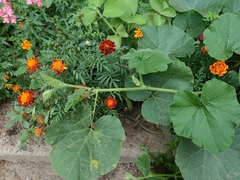 Cucurbita maxima
 Citrus maxima
 Citrullus lanatus
 Verticillium dahliae
 Glyceria maxima
 Solanum lycopersicum
 Cucurbita
 Diabrotica
 Triticum aestivum
 Cucurbita maxima subsp. andreana
 Corylus maxima
 Corylus avellana