View: List Claim type Research area Organism Taxon as written Decade Paper Observation observed original result measured Claim · model-written summary
The listed media gave the highest callus induction percentage .
per cent callus induction e0 Verbatim
e0 “the highest per cent callus induction ”
✓ located verbatim in the source · abstract, characters 403–440 t0 “SUNFLOWER ”
✓ located verbatim in the source · title, characters 28–37 Other claims from this paper (4) Association observed original result measured Claim · model-written summary
Embryo age affected immature embryo callus induction percentage .
embryo-age e0 callus induction percentage e0 Not reported Direction
Verbatim
e0 “embryo-age had evident effects on the callus induction percentage of immature embryo ”
✓ located verbatim in the source · abstract, characters 487–571 e1 “five maize lines (Zea mays .L) ”
✓ located verbatim in the source · abstract, characters 23–52 Other claims from this paper (7) Intervention effect observed original result positive measured Claim · model-written summary
Leaf explants gave the highest percentage of callus induction in Curcuma caesia
percentage of callus induction e2 Not reported Comparator
Verbatim
t0 “Curcuma caesia
✓ located verbatim in the source · title, characters 67–81 e2 “Leaf explants gave the highest percentage of callus induction ”
✓ located verbatim in the source · abstract, characters 1057–1118 Other claims from this paper (5) Intervention effect observed original result negative measured Claim · model-written summary
Higher 2,4-D concentrations reduced callus induction percentage drastically in potato.
higher concentrations e2 callus induction percentage e2 Not reported Comparator
Verbatim
t0 “in vitro callus induction in potato ”
✓ located verbatim in the source · title, characters 15–50 e2 “The increasing concentrations of 2, 4-D exhibited an increase in callus induction percentage in both studied genotypes, but at the higher concentrations callus induction percentage reduced drastically ”
✓ located verbatim in the source · abstract, characters 396–596 Other claims from this paper (6) Observation observed original result positive measured Claim · model-written summary
Immature embryo culture gave the highest callus induction percentage of 99.10.
immature embryo e0 percentage of callus induction e0 Verbatim
e0 “The highest percentage of callus induction was observed (99.10) in immature embryo culture ”
✓ located verbatim in the source · abstract, characters 777–867 t0 “Maize ”
✓ located verbatim in the source · title, characters 42–47 Other claims from this paper (2) Intervention effect observed original result positive measured Claim · model-written summary
MSNB medium yielded the highest callus induction percentage of 95 %.
callus induction e0 Not reported Comparator
Verbatim
e0 “media, MSNB, gave highest percentage (95 %) of callus induction ”
✓ located verbatim in the source · abstract, characters 1148–1211 t0 “okra ”
✓ located verbatim in the source · title, characters 52–56 Other claims from this paper (3) Observation observed original result measured Claim · model-written summary
Medium solidification level greatly affected callus induction percentage .
levels of medium solidification e0 percentage of callus induction e0 Verbatim
e0 “levels of medium solidification greatly affect the percentage of callus induction . ”
✓ located verbatim in the source · abstract, characters 806–888 t0 “Gossypium hirsutum L.
✓ located verbatim in the source · title, characters 54–75 Other claims from this paper (7) Association observed original result significant (as stated) measured Claim · model-written summary
BAP concentration significantly influenced callus induction percentage .
percentage of callus induction e0 Not reported Direction
Verbatim
e0 “The concentration of BAP exhibited significant influence on the percentage of callus induction ”
✓ located verbatim in the source · abstract, characters 318–412 t0 “strawberry ”
✓ located verbatim in the source · title, characters 93–103 Other claims from this paper (1) Observation observed original result positive measured Claim · model-written summary
The selected treatments maximized callus induction percentage in both genotypes.
callus induction percentage e0 Verbatim
e0 “maximum callus induction percentage in both the genotypes ”
✓ located verbatim in the source · abstract, characters 571–628 t0 “sugarcane (Saccharum officinarum l.) ”
✓ located verbatim in the source · title, characters 94–130 Other claims from this paper (6) Intervention effect observed original result significant (as stated) measured Claim · model-written summary
2,4-D significantly affected callus induction percentage .
callus induction percentage e0 Not reported Comparator Direction
Verbatim
e0 “2,4-D had a high significant effect on callus induction percentage . ”
✓ located verbatim in the source · abstract, characters 1137–1204 t0 “Cumin (Cuminum cyminum ) ”
✓ located verbatim in the source · title, characters 93–116 Other claims from this paper (9) Lexical search (BM25). All words must match; if nothing does, any word. Organism names also match every spelling of the same organism. No semantic search yet.
 Helianthus annuust0
 Zea mays
 Curcuma caesia
 Solanum tuberosum
 Abelmoschus esculentus
 Gossypium hirsutum
 Fragaria
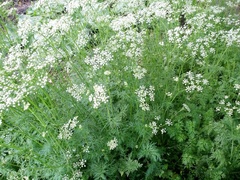 Cuminum cyminum