
Claim · model-written summary
A. altissima and R. davurica were detectable in the mid- and late-growing seasons, with little overlap in key spectral features.
- Taxon
- A. altissima and R. davurica
 Rhamnus davurica
 Ailanthus altissimuse5
- Outcome
- detectablee5
- Qualifier
- little overlap in key spectral features across datese5
Verbatim
t0“Using phenology to improve invasive plant detection”
e5“A. altissima and R. davurica were both detectable in the mid‐ and late‐growing seasons, with little overlap in key spectral features across dates”
Title
Using phenology to improve invasive plant detection in fine‐scale hyperspectral drone‐based images
Kelsey S. Huelsman; Howard E. Epstein; Xi Yang; et al. Remote Sensing in Ecology and Conservation 2025. doi:10.1002/rse2.70049
Other claims from this paper (5)
- Observation All three invasive species could be detected in June.
- Method / resource Only E. umbellata had consistently accurate detection algorithms across the growing season.
- Observation The most accurate summer detection algorithms for E. umbellata included features in the yellow‐orange spectral region.
- Method / resource A small subset of hyperspectral data can accurately detect invasive plants in heterogeneous plant communities.
- Method / resource Incorporating species-specific phenological traits into detection algorithms improves detection.
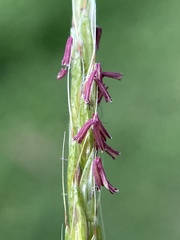 Microstegium vimineum