Clusia hilariana 31 claims

species · family Clusiaceae · green plant · NCBI Taxonomy ↗

Also written in claims: C . hilariana

4 spellings

Clusia hilariana
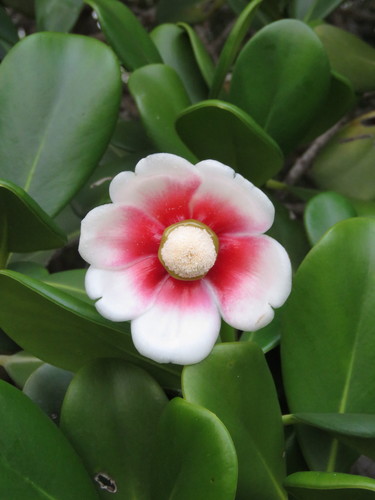
Clusia hilarianaDiogo Luiz · CC BY 4.0 · iNaturalist ↗
Intervention effectobservedoriginal resultnegativemeasured

Claim · model-written summary

Young leaves developed abaxial micromorphological injury, while expanded leaves developed injury on both surfaces.

Taxon
Clusia hilariana Schltdl.Clusia hilarianat0
Organ / stage
young leavese0
Treatment
particulate deposition of iront0
Outcome
Micromorphological injurye0

Not reportedComparatorDirection

Verbatim

e0

“Micromorphological injury occurred in the abaxial surface of young leaves and on both surfaces of expanded leaves”

✓ located verbatim in the source · abstract, characters 516–629
t0

“leaves of Clusia hilariana Schltdl. (Clusiaceae) caused by particulate deposition of iron”

✓ located verbatim in the source · title, characters 31–120

Title

Early detection of injuries in leaves of Clusia hilariana Schltdl. (Clusiaceae) caused by particulate deposition of iron

Diego Ismael Rocha; Luzimar Campos da Silva; Eduardo Gusmão Pereira; et al. Revista Árvore 2014. doi:10.1590/s0100-67622014000300004

Other claims from this paper (5)
Observationobservedoriginal resultnegativemeasured

Claim · model-written summary

Adaxial leaf surfaces frequently showed wax erosion and cuticle rupture.

Taxon
Clusia hilariana Schltdl.Clusia hilarianat0
Organ / stage
adaxial surfacee0
Outcome
Erosion of the epicuticular wax and cuticle rupturee0

Verbatim

e0

“Erosion of the epicuticular wax and cuticle rupture were frequent on the adaxial surface”

✓ located verbatim in the source · abstract, characters 631–719
t0

“Clusia hilariana Schltdl.”

✓ located verbatim in the source · title, characters 41–66

Title

Early detection of injuries in leaves of Clusia hilariana Schltdl. (Clusiaceae) caused by particulate deposition of iron

Diego Ismael Rocha; Luzimar Campos da Silva; Eduardo Gusmão Pereira; et al. Revista Árvore 2014. doi:10.1590/s0100-67622014000300004

Other claims from this paper (5)
Observationobservedoriginal resultnegativemeasured

Claim · model-written summary

Abaxial surfaces had reduced epidermal wall sinuosity, stomatal deformity and obstruction.

Taxon
Clusia hilariana Schltdl.Clusia hilarianat0
Organ / stage
abaxial surfacee0
Outcome
loss of sinuosity on the anticlinal wall of the epidermal cells, stomatal deformity and obstructione0

Verbatim

e0

“on the abaxial surface of both leaves there was a loss of sinuosity on the anticlinal wall of the epidermal cells, stomatal deformity and obstruction”

✓ located verbatim in the source · abstract, characters 727–876
t0

“Clusia hilariana Schltdl.”

✓ located verbatim in the source · title, characters 41–66

Title

Early detection of injuries in leaves of Clusia hilariana Schltdl. (Clusiaceae) caused by particulate deposition of iron

Diego Ismael Rocha; Luzimar Campos da Silva; Eduardo Gusmão Pereira; et al. Revista Árvore 2014. doi:10.1590/s0100-67622014000300004

Other claims from this paper (5)
Observationobservedoriginal resultnegativemeasured

Claim · model-written summary

Micromorphometric alterations occurred in all examined leaf tissues except epidermal cell height.

Taxon
Clusia hilariana Schltdl.Clusia hilarianat0
Organ / stage
leaf tissuese0
Outcome
Micromorphometric alterationse0
Qualifier
except in the height of epidermic cellse0

Verbatim

e0

“Micromorphometric alterations were seen in all leaf tissues except in the height of epidermic cells”

✓ located verbatim in the source · abstract, characters 878–977
t0

“Clusia hilariana Schltdl.”

✓ located verbatim in the source · title, characters 41–66

Title

Early detection of injuries in leaves of Clusia hilariana Schltdl. (Clusiaceae) caused by particulate deposition of iron

Diego Ismael Rocha; Luzimar Campos da Silva; Eduardo Gusmão Pereira; et al. Revista Árvore 2014. doi:10.1590/s0100-67622014000300004

Other claims from this paper (5)
Intervention effectobservedoriginal resultnegativemeasured

Claim · model-written summary

Young leaves had the greatest difference in leaf-blade thickness after iron particulate exposure.

Taxon
Clusia hilariana Schltdl.Clusia hilarianat0
Organ / stage
young leavese0
Treatment
SPMFee0
Outcome
difference in thickness of the leaf bladee0
Direction
higheste0

Not reportedComparator

Verbatim

e0

“The highest difference in thickness of the leaf blade was seen in young leaves of plants subjected to SPMFe”

✓ located verbatim in the source · abstract, characters 1046–1153
t0

“Clusia hilariana Schltdl.”

✓ located verbatim in the source · title, characters 41–66

Title

Early detection of injuries in leaves of Clusia hilariana Schltdl. (Clusiaceae) caused by particulate deposition of iron

Diego Ismael Rocha; Luzimar Campos da Silva; Eduardo Gusmão Pereira; et al. Revista Árvore 2014. doi:10.1590/s0100-67622014000300004

Other claims from this paper (5)
Method / resourceauthor interpretationoriginal resultmeasured

Claim · model-written summary

The leaf alterations showed prognostic potential for evaluating particulate deposition impacts.

Taxon
Clusia hilariana Schltdl.Clusia hilarianae0
Outcome
prognostic potentiale0

Not reportedComparatorValue

Verbatim

e0

“micromorphological and micromorphometric alterations in the leaf blade of Clusia hilariana Schltdl. showed the prognostic potential of these tools on the evaluation of impacts caused by the deposition of particulate matter”

✓ located verbatim in the source · abstract, characters 1248–1470

Title

Early detection of injuries in leaves of Clusia hilariana Schltdl. (Clusiaceae) caused by particulate deposition of iron

Diego Ismael Rocha; Luzimar Campos da Silva; Eduardo Gusmão Pereira; et al. Revista Árvore 2014. doi:10.1590/s0100-67622014000300004

Other claims from this paper (5)
Intervention effectobservedoriginal resultno effectmeasured

Claim · model-written summary

Seedling relative growth rates did not differ between water treatments.

Taxon
C. hilarianaClusia hilarianae0
Treatment
water treatmentse0
Outcome
relative growth rates of seedlingse0
Direction
did not differe0
Comparator
water treatmentse0

Verbatim

e0

“The relative growth rates of seedlings of C. hilariana did not differ between water treatments.”

✓ located verbatim in the source · abstract, characters 1114–1209

Title

Germination biology and seedling growth of Clusia hilariana Schltdl., a dominant CAM‐tree of drought‐prone sandy coastal plains

Aline Cavalcante; Maria Isabel Guedes Braz; Eduardo Arcoverde de Mattos Ecological Research 2010. doi:10.1007/s11284-010-0708-0

Other claims from this paper (5)
Mechanismauthor interpretationoriginal resultmeasured

Claim · model-written summary

The authors conclude that the main regeneration niche is not caused by high seed and seedling sensitivity to water shortage.

Taxon
C . hilarianaClusia hilarianae0
Outcome
major regeneration nichee0
Qualifier
not a consequence of a high sensitivity of seeds and seedlings to water shortagee0

Verbatim

e0

“Thus, the major regeneration niche of C . hilariana is not a consequence of a high sensitivity of seeds and seedlings to water shortage.”

✓ located verbatim in the source · abstract, characters 1210–1346

Title

Germination biology and seedling growth of Clusia hilariana Schltdl., a dominant CAM‐tree of drought‐prone sandy coastal plains

Aline Cavalcante; Maria Isabel Guedes Braz; Eduardo Arcoverde de Mattos Ecological Research 2010. doi:10.1007/s11284-010-0708-0

Other claims from this paper (5)
Mechanismauthor interpretationoriginal resultmeasured

Claim · model-written summary

Clusia hilariana has seed and seedling traits that may help establishment in harsh restinga environments.

Taxon
C. hilarianaClusia hilarianae0
Outcome
overcome establishment constraintse0
Qualifier
seed and seedling traitse0

Verbatim

e0

“Nonetheless, C. hilariana showed an array of seed and seedling traits that may help to overcome establishment constraints of the harsh environment of restingas .”

✓ located verbatim in the source · abstract, characters 1347–1508

Title

Germination biology and seedling growth of Clusia hilariana Schltdl., a dominant CAM‐tree of drought‐prone sandy coastal plains

Aline Cavalcante; Maria Isabel Guedes Braz; Eduardo Arcoverde de Mattos Ecological Research 2010. doi:10.1007/s11284-010-0708-0

Other claims from this paper (5)
Observationobservedoriginal resultmeasured

Claim · model-written summary

Clusia hilariana had three PEPC isoforms.

Taxon
Clusia hilarianaClusia hilarianae0
Gene
PEPCe1
Outcome
different isoformse0
Value
three different isoformse0

Verbatim

e0

“Sequence analysis of DNA isolated from the obligate CAM species, Clusia hilariana, the obligate C3 species, Clusia multiflora, and an intermediate species that can switch between C3 and CAM photosynthesis, Clusia minor, revealed three different isoforms for C. hilariana and one each for the other two species.”

✓ located verbatim in the source · abstract, characters 354–664
e1

“PEPC from the intermediate species had high homology”

✓ located verbatim in the source · abstract, characters 700–752

Title

Phosphoenolpyruvate carboxylase genes in C3, crassulacean acid metabolism (CAM) and C3/CAM intermediate species of the genus Clusia: rapid reversible C3/CAM switches are based on the C3 housekeeping gene

ANJA VAASEN; DOMINIK BEGEROW; RÜDIGER HAMPP Plant Cell & Environment 2006. doi:10.1111/j.1365-3040.2006.01583.x

Other claims from this paper (9)