View: List Claim type Research area Organism Taxon as written Decade Paper Intervention effect observed original result no effect measured Claim · model-written summary
Nitrogen beyond 90 kg N ha −1 per regrowth period did not enhance regrowth .
‘Tifton 85’ Bermudagrass t0 N rate beyond 90 kg N ha −1 regrowth period −1 e0 Not reported Comparator
Verbatim
e0 “Regrowth was not enhanced by N rate beyond 90 kg N ha −1 regrowth period −1 ”
✓ located verbatim in the source · abstract, characters 1441–1516 t0 “‘Tifton 85’ Bermudagrass ”
✓ located verbatim in the source · title, characters 21–45 Other claims from this paper (9) Association observed original result measured Claim · model-written summary
Etiolated regrowth as a fraction of full-light regrowth rose with advancing growth stage in all three bromegrasses.
growth stage e0 percentage of total etiolated regrowth to total full light regrowth e0 Verbatim
e0 “The percentage of total etiolated regrowth to total full light regrowth increased with advanced growth stage in all three bromegrasses ”
✓ located verbatim in the source · abstract, characters 1312–1446 Other claims from this paper (9) Intervention effect observed original result positive measured Claim · model-written summary
Clipping had positive effects on wheat regrowth .
positive effects e0 Not reported Comparator
Verbatim
t0 “Wheat ”
✓ located verbatim in the source · title, characters 0–5 e0 “Clipping had positive effects on regrowth ”
✓ located verbatim in the source · abstract, characters 1091–1132 Other claims from this paper (10) Mechanism author interpretation original result measured Claim · model-written summary
Anatomical differences between branches and regrowth are attributed to rapid regrowth after coppicing or pollarding.
anatomical differences between branch and regrowth e0 rapid regrowth after coppicing or pollarding e0 Verbatim
e0 “the anatomical differences between branch and regrowth are the result of rapid regrowth after coppicing or pollarding ”
✓ located verbatim in the source · abstract, characters 698–815 t0 “Poincianella pyramidalis
✓ located verbatim in the source · abstract, characters 0–24 Other claims from this paper (2) Method / resource author interpretation original result positive measured Claim · model-written summary
Regrowth using the cryo-plate method was rapid and had the highest survival and regrowth .
cryo-plate method e0 survival and regrowth e0 Not reported Comparator
Verbatim
e0 “Regrowth of cryopreserved protocorms using the cryo-plate method was rapid with the highest survival and regrowth . ”
✓ located verbatim in the source · abstract, characters 1242–1356 Other claims from this paper (3) Recommendation author interpretation review summary positive basis n/a Claim · model-written summary
Dehydration time, preconditioning and regrowth conditions should be optimized for high regrowth .
herbaceous and woody plants e1 dehydration time, preconditioning of materials and post-cryopreservation regrowth conditions e0 Verbatim
e0 “Optimization of the dehydration time, preconditioning of materials and post-cryopreservation regrowth conditions are crucial to achieve high regrowth . ”
✓ located verbatim in the source · abstract, characters 1392–1542 e1 “both herbaceous and woody plants ”
✓ located verbatim in the source · abstract, characters 1282–1314 Other claims from this paper (7) Observation observed original result measured Claim · model-written summary
Unmown tiller number, regrowth tiller number and regrowth biomass best discriminated between sorghum accessions.
Unmown tiller number, regrowth tiller number, and regrowth biomass e4 best discriminated between accessions e4 Verbatim
e0 “Phenotypes of sorghum species (Sorghum sp.) have characteristics making them valuable summer annual cover crops ”
✓ located verbatim in the source · abstract, characters 0–111 e4 “Unmown tiller number, regrowth tiller number, and regrowth biomass best discriminated between accessions ”
✓ located verbatim in the source · abstract, characters 513–617 Other claims from this paper (8) Observation observed original result measured Claim · model-written summary
Cotton stalk regrowth varied among three environments.
Cotton stalk regrowth e0 three environments e0 Verbatim
e0 “Cotton stalk regrowth was influenced by the three environments. ”
✓ located verbatim in the source · abstract, characters 849–912 Other claims from this paper (9) Intervention effect Two sequential 2,4-D amine applications produced better stalk destruction, with 4.9% regrowth at SHGO in 2013. Observation Two sequential 2,4-D amine applications left 16.9% cotton stalk regrowth at SHGO in 2014. Observation Two sequential 2,4-D amine applications left 36.9% cotton stalk regrowth at LEM-BA in 2014. Intervention effect A single 2,4-D amine application was ineffective for cotton stalk regrowth control. Intervention effect 2,4-D amine followed by carfentrazone-ethyl was ineffective for cotton stalk regrowth control. Intervention effect 2,4-D amine followed by paraquat was ineffective for cotton stalk regrowth control. Intervention effect 2,4-D amine followed by saflufenacil was ineffective for cotton stalk regrowth control. Intervention effect 2,4-D amine followed by paraquat plus diuron was ineffective for cotton stalk regrowth control. Intervention effect 2,4-D amine followed by glufosinate-ammonium was ineffective for cotton stalk regrowth control. Recommendation author interpretation original result positive basis n/a Claim · model-written summary
Cutting at 35 to 42 regrowth days is optimal for maximum yields and regrowth of rich forage and pasture persistence.
cutting at 35 to 42 regrowth days e5 Verbatim
e4 “Brachiaria brizantha cv. Piatã
✓ located verbatim in the source · abstract, characters 198–228 e5 “cutting at 35 to 42 regrowth days were optimal for obtain maximum yields and regrowth of rich forage and pasture persistence ”
✓ located verbatim in the source · abstract, characters 788–912 Other claims from this paper (8) Intervention effect observed original result positive measured Claim · model-written summary
Root regrowth after frost was greater than herbage regrowth in March and April.
frost treatment e0 regrowth of roots e1 regrowth of herbage e1 Verbatim
t0 “timothy and perennial ryegrass ”
✓ located verbatim in the source · title, characters 56–86 e0 “The frost treatment caused compensatory root and herbage growth ”
✓ located verbatim in the source · abstract, characters 414–477 e1 “regrowth of roots in March and April was greater than regrowth of herbage ”
✓ located verbatim in the source · abstract, characters 483–556 Other claims from this paper (10) Lexical search (BM25). All words must match; if nothing does, any word. Organism names also match every spelling of the same organism. No semantic search yet.
 Triticum aestivum
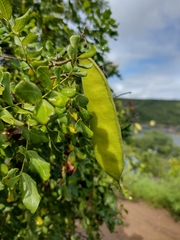 Cenostigma pyramidale
 Sorghum
 Gossypium hirsutum
 Urochloa brizantha
 Lolium perenne
 Phleum pratense