View: List Claim type Research area Organism Taxon as written Decade Paper A claim can belong to several research areas, so group counts add up to more than the total.
Observation observed original result measured Claim · model-written summary
Laboratory germination maxima preceded field emergence maxima by 12 to 26 days.
laboratory germination test maxima e0 field emergence maxima e0 Verbatim
e0 “laboratory germination test maxima preceded field emergence maxima by 12 to 26 d. ”
✓ located verbatim in the source · abstract, characters 1050–1131 t0 “Sweet Corn ”
✓ located verbatim in the source · title, characters 81–91 Other claims from this paper (16) Method / resource observed original result negative simulated Claim · model-written summary
That adjustment gave predicted maxima about 25% below observations.
predicted maxima e0 observed maxima e0 Not reported Taxon
Verbatim
e0 “predicted maxima approximately 25% less than the observed maxima ”
✓ located verbatim in the source · abstract, characters 1308–1372 Other claims from this paper (5) Association observed original result measured Claim · model-written summary
The CH4 emission maxima often matched the maxima of daily mean air temperature.
CH 4 emission maxima e2 maxima of daily mean air temperature e2 Verbatim
e0 “Seasonal variations in CH 4 emission rates from rice paddies ”
✓ located verbatim in the source · abstract, characters 0–60 e2 “the CH 4 emission maxima often matched the maxima of daily mean air temperature ”
✓ located verbatim in the source · abstract, characters 703–782 Other claims from this paper (6) Observation observed original result measured Claim · model-written summary
Resistant and less resistant accessions belong to Cucurbita maxima , C. maxima subsp. maxima , C. maxima subsp. andreana and C. okeechobeensis subsp. martinezii .
Verbatim
e0 “Resistant and less resistant accessions belong to the species Cucurbita maxima , C . maxima subsp. maxima , C . maxima subsp. andreana , and C . okeechobeensis subsp. martinezii ”
✓ located verbatim in the source · abstract, characters 1351–1528 Other claims from this paper (7) Method / resource observed original result basis n/a Claim · model-written summary
The Nepenthes maxima cultivar Lake Poso is described.
Nepenthes maxima 'Lake Poso'e0 Nepenthes maxima 'Lake Poso'e0 Not reported Comparator Value
Verbatim
e0 “Nepenthes maxima 'Lake Poso' ”
✓ located verbatim in the source · abstract, characters 54–82 Other claims from this paper (5) Observation observed original result measured Claim · model-written summary
Laboratory germination maxima preceded field emergence maxima by 12 to 26 days.
laboratory germination test maxima e0 field emergence maxima e0 Verbatim
e0 “laboratory germination test maxima preceded field emergence maxima by 12 to 26 d. ”
✓ located verbatim in the source · abstract, characters 1050–1131 t0 “Sweet Corn ”
✓ located verbatim in the source · title, characters 81–91 Other claims from this paper (16) Method / resource observed original result negative simulated Claim · model-written summary
That adjustment gave predicted maxima about 25% below observations.
predicted maxima e0 observed maxima e0 Not reported Taxon
Verbatim
e0 “predicted maxima approximately 25% less than the observed maxima ”
✓ located verbatim in the source · abstract, characters 1308–1372 Other claims from this paper (5) Observation observed original result positive measured Claim · model-written summary
C. maxima showed high genotypic variability.
genotypic variability e0 Verbatim
e0 “This study proved the existence of high genotypic variability in C. maxima
✓ located verbatim in the source · abstract, characters 1087–1161 Other claims from this paper (3) Observation observed original result measured Claim · model-written summary
All C. maxima crude extracts contained vitamin C.
Verbatim
e0 “vitamin C in all the C. maxima crude extracts. ”
✓ located verbatim in the source · abstract, characters 1149–1195 Other claims from this paper (10) Observation observed original result negative measured Claim · model-written summary
Ralstonia solanacearum caused Cucurbita maxima bacterial wilt.
C. maxima bacterial wilte0 Verbatim
e0 “the pathogen of C. maxima bacterial wilt was Ralstonia solanacearum ”
✓ located verbatim in the source · abstract, characters 876–943 Other claims from this paper (12) Observation observed original result measured Claim · model-written summary
Oospores were absent in C. maxima .
Verbatim
e0 “C. maxima (cv. Tripoli) ”
✓ located verbatim in the source · abstract, characters 1564–1587 Other claims from this paper (19) Observation observed original result measured Claim · model-written summary
Spring nodular activity maxima were 8-250 times summer minima.
native Australian legumes t0 8-250 times summer minima e0 Verbatim
e0 “spring maxima 8-250 times summer minima ”
✓ located verbatim in the source · abstract, characters 455–494 t0 “Native Australian Legumes ”
✓ located verbatim in the source · title, characters 21–46 Other claims from this paper (4) Observation observed original result measured Claim · model-written summary
No seedlings were found within established G. maxima infestations.
No seedlings were found e1 Verbatim
e1 “No seedlings were found within established G. maxima infestations ”
✓ located verbatim in the source · abstract, characters 522–587 Other claims from this paper (6) Observation observed original result measured Claim · model-written summary
Pollen tube growth differed for the C. maxima ×C. moschata (Fig. 3) cross.
C. maxima ×C. moschata (Fig. 3)e0 Verbatim
e0 “C. maxima ×C. moschata (Fig. 3) ”
✓ located verbatim in the source · abstract, characters 318–348 Other claims from this paper (10) Observation observed original result measured Claim · model-written summary
Pollen tube growth differed for the C. maxima ×C. pepo (Fig. 4) cross.
C. maxima ×C. pepo (Fig. 4)e0 Verbatim
e0 “C. maxima ×C. pepo (Fig. 4) ”
✓ located verbatim in the source · abstract, characters 382–409 Other claims from this paper (10) Observation observed original result measured Claim · model-written summary
Seed surface ultrastructure distinguishes Spergula maxima from Spergula arvensis subsp. arvensis , supporting Spergula arvensis subsp. maxima .
Spergula arvensis subsp. maxima e0 Verbatim
e0 “between Spergula maxima and Spergula arvensis subsp. arvensis , accordingly we propose — Spergula arvensis subsp. maxima
✓ located verbatim in the source · abstract, characters 1538–1657 Other claims from this paper (7) Observation observed original result measured Claim · model-written summary
No seedlings were found within established G. maxima infestations.
No seedlings were found e1 Verbatim
e1 “No seedlings were found within established G. maxima infestations ”
✓ located verbatim in the source · abstract, characters 522–587 Other claims from this paper (6) Observation observed original result basis n/a Claim · model-written summary
A new species, M. maxima , was described from Northern Peru.
Verbatim
e0 “M. maxima
✓ located verbatim in the source · abstract, characters 53–62 t0 “Muhlenbergia and Uniola
✓ located verbatim in the source · title, characters 21–44 e1 “Northern Peru ”
✓ located verbatim in the source · abstract, characters 103–116 Other claims from this paper (2) Method / resource observed original result measured Claim · model-written summary
The linkage analysis revealed 20 genetic linkage groups of Cucurbita maxima .
genetic linkage groups e0 Verbatim
t0 “Cucurbita maxima
✓ located verbatim in the source · title, characters 23–39 e0 “revealed 20 genetic linkage groups of C. maxima
✓ located verbatim in the source · abstract, characters 309–356 Other claims from this paper (3) Observation observed original result measured Claim · model-written summary
The C. maxima genome contained 102 identified CmWRKY genes.
102 CmWRKY genes e0 Verbatim
e0 “102 CmWRKY genes were identified in the C. maxima genome ”
✓ located verbatim in the source · abstract, characters 339–395 Other claims from this paper (3) Method / resource observed original result measured Claim · model-written summary
The Cucurbita maxima linkage map covers a genetic distance of 991.5 cM.
genetic distance e0 Verbatim
t0 “Cucurbita maxima
✓ located verbatim in the source · title, characters 23–39 e0 “covering a genetic distance of 991.5 cM ”
✓ located verbatim in the source · abstract, characters 357–396 Other claims from this paper (3) Method / resource observed original result basis n/a Claim · model-written summary
The Nepenthes maxima cultivar Lake Poso is described.
Nepenthes maxima 'Lake Poso'e0 Nepenthes maxima 'Lake Poso'e0 Not reported Comparator Value
Verbatim
e0 “Nepenthes maxima 'Lake Poso' ”
✓ located verbatim in the source · abstract, characters 54–82 Other claims from this paper (5) Method / resource observed original result negative simulated Claim · model-written summary
That adjustment gave predicted maxima about 25% below observations.
predicted maxima e0 observed maxima e0 Not reported Taxon
Verbatim
e0 “predicted maxima approximately 25% less than the observed maxima ”
✓ located verbatim in the source · abstract, characters 1308–1372 Other claims from this paper (5) Method / resource observed original result measured Claim · model-written summary
The linkage analysis revealed 20 genetic linkage groups of Cucurbita maxima .
genetic linkage groups e0 Verbatim
t0 “Cucurbita maxima
✓ located verbatim in the source · title, characters 23–39 e0 “revealed 20 genetic linkage groups of C. maxima
✓ located verbatim in the source · abstract, characters 309–356 Other claims from this paper (3)
not stated 12 Observation observed original result measured Claim · model-written summary
Cucurbita maxima has twenty bivalent chromosomes.
bivalent chromosomes e0 Verbatim
e0 “Cucurbita pepo and C. maxima each has twenty bivalent chromosomes ”
✓ located verbatim in the source · abstract, characters 171–236 Other claims from this paper (10) Recommendation author interpretation original result positive basis n/a Claim · model-written summary
The authors recommend NPs as a foliar fertilizer for Citrus maxima on the basis of these comparisons.
advantages of NPs as a foliar fertilizer e5 Verbatim
t0 “with Citrus maxima leaves ”
✓ located verbatim in the source · title, characters 37–62 e5 “exhibited the advantages of NPs as a foliar fertilizer ”
✓ located verbatim in the source · abstract, characters 1922–1976 Other claims from this paper (18) Observation observed original result measured Claim · model-written summary
Synthesized nanoparticles had absorption maxima typical of silver nanoparticles.
absorption maxima e0 Not reported Taxon Direction
Verbatim
e0 “The absorption maxima of the synthesized nanoparticles (NPs) were typical to those of AgNPs according to spectroscopy ”
✓ located verbatim in the source · abstract, characters 345–462 Other claims from this paper (11) Lexical search (BM25). All words must match; if nothing does, any word. Organism names also match every spelling of the same organism. No semantic search yet.
 Oryza sativa
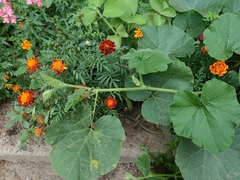 Cucurbita maxima
 Nepenthes maxima
 Citrus maxima
 Ralstonia solanacearum
 Glyceria maxima