View: List Claim type Research area Organism Taxon as written Decade Paper Intervention effect author interpretation original result mixed simulated Claim · model-written summary
Deeper light penetration improved tomato photosynthesis at summer light intensities , but not at winter light intensities .
deeper penetration of light in the canopy e0 crop photosynthesis e0 high light intensities (summer) e0 low light intensities (winter) e0 Verbatim
e0 “At high light intensities (summer) deeper penetration of light in the canopy improves crop photosynthesis, but not at low light intensities (winter). ”
✓ located verbatim in the source · abstract, characters 1544–1693 e1 “greenhouse-grown tomato crop ”
✓ located verbatim in the source · abstract, characters 540–568 Other claims from this paper (7) Intervention effect observed original result measured Claim · model-written summary
Lawn grasses responded differently to the various light intensities in the growth characters measured.
various light intensities e0 responded to various light intensities differently e0 Not reported Comparator Direction
Verbatim
e0 “Lawn grasses responded to various light intensities differently ”
✓ located verbatim in the source · abstract, characters 1234–1297 Other claims from this paper (9) Recommendation author interpretation original result basis n/a Claim · model-written summary
The authors conclude that Mentha arvensis is best grown under low light intensities .
best grown under low light intensities e0 Verbatim
e0 “Mentha arvensis is best grown under low light intensities ”
✓ located verbatim in the source · abstract, characters 1316–1373 Other claims from this paper (3) Intervention effect observed original result positive measured Claim · model-written summary
Kohlrabi anthocyanin concentration was greater at higher than lower light intensities .
increasing light intensities e0 total concentration of anthocyanins e0 lower light intensities e0 Verbatim
e0 “For kohlrabi, with increasing light intensities , the total concentration of anthocyanins was greater compared with those grown under lower light intensities ”
✓ located verbatim in the source · abstract, characters 1786–1942 Other claims from this paper (8) Association observed original result measured Claim · model-written summary
Leaves became thinner at lower light intensities .
lower light intensities e0 Verbatim
e0 “leaves become thinner at lower light intensities ”
✓ located verbatim in the source · abstract, characters 968–1016 t0 “black pepper (Piper nigrum L.) ”
✓ located verbatim in the source · title, characters 75–105 Other claims from this paper (5) Observation observed original result positive measured Claim · model-written summary
Regel privet tolerated all tested light intensities .
all light intensities used e0 Verbatim
e0 “Regel privet was tolerant of all light intensities used ”
✓ located verbatim in the source · abstract, characters 1785–1840 Other claims from this paper (16) Intervention effect observed original result no effect not significant (as stated) measured Claim · model-written summary
Hedera height did not differ statistically across light sources or intensities .
light sources and light intensities e0 did not show differences e0 Not reported Comparator
Verbatim
e0 “Hedera rhombea heights did not show differences statistically as responses to light sources and light intensities . ”
✓ located verbatim in the source · abstract, characters 509–623 Other claims from this paper (11) Intervention effect observed original result negative measured Claim · model-written summary
Leafy-green quality often deteriorated at higher light intensities .
higher light intensities e0 Not reported Comparator
Verbatim
e0 “the quality of the leafy greens often deteriorated at higher light intensities . ”
✓ located verbatim in the source · abstract, characters 1112–1191 Other claims from this paper (15) Association observed original result measured Claim · model-written summary
Shawen spinach exhibited leaf curling under all four light intensities .
all four light intensities e6 Not reported Direction
Verbatim
e6 “Shawen spinach exhibited leaf curling under all four light intensities ”
✓ located verbatim in the source · abstract, characters 1298–1368 Other claims from this paper (9) Association observed original result measured Claim · model-written summary
Response to increasing soil N was greater at higher light intensities .
higher light intensities e0 response to soil increments of N e0 Verbatim
e0 “response to soil increments of N was greater at higher light intensities ”
✓ located verbatim in the source · abstract, characters 427–499 t0 “Spinach ”
✓ located verbatim in the source · title, characters 24–31 Other claims from this paper (9) Lexical search (BM25). All words must match; if nothing does, any word. Organism names also match every spelling of the same organism. No semantic search yet.
 Solanum lycopersicum
 Mentha arvensis
 Brassica oleracea var. gongylodes
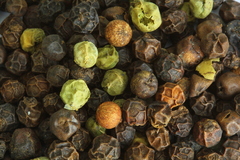 Piper nigrum
 Hedera rhombea
 Spinacia oleracea