View: List Claim type Research area Organism Taxon as written Decade Paper Intervention effect observed original result positive measured Claim · model-written summary
The degree of inhibition was lower at low light intensities than at high light intensities .
low light intensities e1 degree of inhibition e1 high light intensities e1 Verbatim
e1 “The degree of inhibition was lower at low light intensities than at high light intensities ”
✓ located verbatim in the source · abstract, characters 646–736 e2 “in isolated spinach chloroplasts ”
✓ located verbatim in the source · abstract, characters 75–107 Other claims from this paper (7) Intervention effect author interpretation original result mixed simulated Claim · model-written summary
Deeper light penetration improved tomato photosynthesis at summer light intensities , but not at winter light intensities .
deeper penetration of light in the canopy e0 crop photosynthesis e0 high light intensities (summer) e0 low light intensities (winter) e0 Verbatim
e0 “At high light intensities (summer) deeper penetration of light in the canopy improves crop photosynthesis, but not at low light intensities (winter). ”
✓ located verbatim in the source · abstract, characters 1544–1693 e1 “greenhouse-grown tomato crop ”
✓ located verbatim in the source · abstract, characters 540–568 Other claims from this paper (7) Intervention effect observed original result measured Claim · model-written summary
Lawn grasses responded differently to the various light intensities in the growth characters measured.
various light intensities e0 responded to various light intensities differently e0 Not reported Comparator Direction
Verbatim
e0 “Lawn grasses responded to various light intensities differently ”
✓ located verbatim in the source · abstract, characters 1234–1297 Other claims from this paper (9) Observation observed review summary negative basis n/a Claim · model-written summary
High light intensities cause photoinhibition in tea.
photoinhibition occurs e0 high light intensities e0 Verbatim
e0 “photoinhibition occurs at high light intensities ”
✓ located verbatim in the source · abstract, characters 832–880 t0 “Tea ”
✓ located after whitespace/quote normalisation · title, characters 17–20 Other claims from this paper (9) Observation author interpretation original result measured Claim · model-written summary
Glyptostrobus is judged adapted to higher light intensities .
adapted to higher light intensities e0 Verbatim
e0 “Glyptostrobus is adapted to higher light intensities ”
✓ located verbatim in the source · abstract, characters 884–936 Other claims from this paper (8) Observation author interpretation original result measured Claim · model-written summary
Metasequoia is judged best adapted to low light intensities .
best adapted to low light intensities e0 Verbatim
e0 “Metasequoia is best adapted to low light intensities ”
✓ located verbatim in the source · abstract, characters 787–839 Other claims from this paper (8) Association observed original result measured Claim · model-written summary
Leaves became thinner at lower light intensities .
lower light intensities e0 Verbatim
e0 “leaves become thinner at lower light intensities ”
✓ located verbatim in the source · abstract, characters 968–1016 t0 “black pepper (Piper nigrum L.) ”
✓ located verbatim in the source · title, characters 75–105 Other claims from this paper (5) Association observed original result measured Claim · model-written summary
Chloroplast position at lower light intensities affected the rapid light curves.
lower light intensities e3 rapid light curves e3 Not reported Direction
Verbatim
t0 “Variegated Pelargonium zonale ”
✓ located verbatim in the source · title, characters 35–64 e3 “the chloroplast position at lower light intensities affected the rapid light curves ”
✓ located verbatim in the source · abstract, characters 1053–1136 Other claims from this paper (4) Association observed original result significant (as stated) measured Claim · model-written summary
CtHCT3 expression correlated significantly and negatively with kaempferol content across light intensities .
different light intensities e0 kaempferol content e0 Verbatim
e0 “CtHCT3 gene expression showed a significantly negative correlation with kaempferol content in safflower grown under different light intensities ”
✓ located verbatim in the source · abstract, characters 1615–1758 Other claims from this paper (6) Mechanism author interpretation review summary basis n/a Claim · model-written summary
Plants may use different phototropism mechanisms at different light intensities .
different mechanisms in response to different light intensities e0 Verbatim
e0 “plant may have different mechanisms in response to different light intensities in phototropism ”
✓ located verbatim in the source · abstract, characters 209–303 Other claims from this paper (5) Mechanism author interpretation original result measured Claim · model-written summary
OsMGD1 was interpreted as regulating photosynthesis across light intensities .
photosynthetic processes e0 different light intensities e0 Verbatim
e0 “OsMGD1 is involved in regulating photosynthetic processes when plants are exposed to different light intensities ”
✓ located verbatim in the source · abstract, characters 1090–1202 t0 “Rice ”
✓ located verbatim in the source · title, characters 0–4 Other claims from this paper (6) Mechanism observed review summary basis n/a Claim · model-written summary
Light responses involve photoreceptor families absorbing different light wavelengths and intensities .
specialized photoreceptor protein families e0 Verbatim
e0 “Plants sense light through the action of specialized photoreceptor protein families that absorb different wavelengths and intensities of light ”
✓ located verbatim in the source · abstract, characters 101–243 Other claims from this paper (3) Recommendation author interpretation original result basis n/a Claim · model-written summary
The authors conclude that Mentha arvensis is best grown under low light intensities .
best grown under low light intensities e0 Verbatim
e0 “Mentha arvensis is best grown under low light intensities ”
✓ located verbatim in the source · abstract, characters 1316–1373 Other claims from this paper (3) Recommendation author interpretation original result basis n/a Claim · model-written summary
Begonia × cheimantha should be grown under reduced light intensities .
Begonia × cheimantha t0 grown under reduced light intensities e3 Verbatim
t0 “Begonia × cheimantha ”
✓ located verbatim in the source · title, characters 77–97 e3 “B. × cheimantha should be grown under reduced light intensities ”
✓ located verbatim in the source · abstract, characters 1310–1373 Other claims from this paper (11) Recommendation author interpretation original result positive basis n/a Claim · model-written summary
Lower light intensities favored acclimatization.
Catasetum x apolloi t0 lower light intensities e0 Verbatim
t0 “Catasetum x apolloi ”
✓ located verbatim in the source · title, characters 47–66 e0 “The conditions that favored the acclimatization were lower light intensities and lower potassium silicate doses ”
✓ located verbatim in the source · abstract, characters 1122–1233 Other claims from this paper (8) Method / resource observed original result positive measured Claim · model-written summary
Measured light intensities 2 m and 3.3 m down into the canopy corresponded to intensities estimated by current canopy models.
light intensities e0 2 m and 3.3 m down into the tree canopy e0 current canopy models e0 Verbatim
e0 “Measured light intensities 2 m and 3.3 m down into the tree canopy corresponded to intensities estimated by using current canopy models ”
✓ located verbatim in the source · abstract, characters 752–887 t0 “white oak ”
✓ located verbatim in the source · title, characters 87–96 Other claims from this paper (12) Method / resource observed original result positive measured Claim · model-written summary
Live-cell RESOLFT nanoscopy uses comparatively low light doses and intensities to overcome the diffraction barrier.
light doses and intensities e1 Not reported Comparator
Verbatim
t0 “transgenic Arabidopsis thaliana ”
✓ located verbatim in the source · title, characters 31–62 e1 “requires and utilizes comparatively low light doses and intensities to overcome the diffraction barrier ”
✓ located verbatim in the source · abstract, characters 319–422 Other claims from this paper (5) Method / resource observed original result simulated Claim · model-written summary
The model simulated qE kinetics at low and high light intensities .
low and high light intensities e0 Verbatim
e0 “The model is able to simulate the kinetics of qE at low and high light intensities . ”
✓ located verbatim in the source · abstract, characters 546–629 e1 “The majority of NPQ in plants ”
✓ located verbatim in the source · abstract, characters 134–163 Other claims from this paper (1) Lexical search (BM25). All words must match; if nothing does, any word. Organism names also match every spelling of the same organism. No semantic search yet.
 Spinacia oleracea
 Solanum lycopersicum
 Glyptostrobus
 Metasequoia
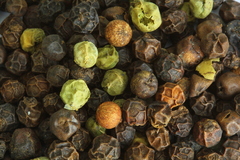 Piper nigrum
 Carthamus tinctorius
 Oryza sativa
 Mentha arvensis
 Quercus alba
 Arabidopsis thaliana