View: List Claim type Research area Organism Taxon as written Decade Paper Intervention effect author interpretation original result mixed simulated Claim · model-written summary
Deeper light penetration improved tomato photosynthesis at summer light intensities , but not at winter light intensities .
deeper penetration of light in the canopy e0 crop photosynthesis e0 high light intensities (summer) e0 low light intensities (winter) e0 Verbatim
e0 “At high light intensities (summer) deeper penetration of light in the canopy improves crop photosynthesis, but not at low light intensities (winter). ”
✓ located verbatim in the source · abstract, characters 1544–1693 e1 “greenhouse-grown tomato crop ”
✓ located verbatim in the source · abstract, characters 540–568 Other claims from this paper (7) Intervention effect observed original result negative measured Claim · model-written summary
Shoot length decreased at higher light intensities .
higher light intensities e0 Not reported Comparator
Verbatim
e0 “At higher light intensities , shoot length decreased ”
✓ located verbatim in the source · abstract, characters 650–701 t0 “red rice ”
✓ located verbatim in the source · title, characters 73–81 Other claims from this paper (11) Recommendation author interpretation original result basis n/a Claim · model-written summary
The authors conclude that Mentha arvensis is best grown under low light intensities .
best grown under low light intensities e0 Verbatim
e0 “Mentha arvensis is best grown under low light intensities ”
✓ located verbatim in the source · abstract, characters 1316–1373 Other claims from this paper (3) Intervention effect observed original result positive measured Claim · model-written summary
Higher light intensities increased monstera biomass.
higher light intensities e0 Not reported Comparator
Verbatim
e0 “similar to monstera plants exposed to higher light intensities ”
✓ located verbatim in the source · abstract, characters 552–614 Other claims from this paper (6) Observation observed original result measured Claim · model-written summary
Development and maturity of Brassica rapa were influenced by light intensities .
light intensities e3 development and maturity e3 Verbatim
t0 “Responses of Brassica rapa “Bokchoy” to Varying Light Intensities Grown Under Hydroponic System ”
✓ located verbatim in the source · title, characters 0–95 e3 “Brassica rapa 's development and maturity were influenced by light intensities . ”
✓ located verbatim in the source · abstract, characters 459–537 Other claims from this paper (4) Association observed original result measured Claim · model-written summary
Leaves became thinner at lower light intensities .
lower light intensities e0 Verbatim
e0 “leaves become thinner at lower light intensities ”
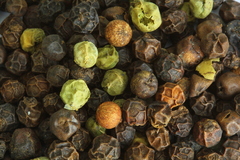
✓ located verbatim in the source · abstract, characters 968–1016 t0 “black pepper (Piper nigrum L.) ”
✓ located verbatim in the source · title, characters 75–105 Other claims from this paper (5) Observation observed review summary negative basis n/a Claim · model-written summary
High light intensities cause photoinhibition in tea.
photoinhibition occurs e0 high light intensities e0 Verbatim
e0 “photoinhibition occurs at high light intensities ”
✓ located verbatim in the source · abstract, characters 832–880 t0 “Tea ”
✓ located after whitespace/quote normalisation · title, characters 17–20 Other claims from this paper (9) Intervention effect observed original result measured Claim · model-written summary
Lawn grasses responded differently to the various light intensities in the growth characters measured.
various light intensities e0 responded to various light intensities differently e0 Not reported Comparator Direction
Verbatim
e0 “Lawn grasses responded to various light intensities differently ”
✓ located verbatim in the source · abstract, characters 1234–1297 Other claims from this paper (9) Intervention effect observed original result measured Claim · model-written summary
Transpiration rate and stomatal conductance of low- light grown plants responded slowly to varied light intensities , whereas plants grown under natural light were more sensitive to changing light intensities .
young grape plants e1 varied light intensities e1 Transpiration rate and stomatal conductance e1 responded slowly e1 natural light environment e1 Verbatim
e1 “Transpiration rate and stomatal conductance responded slowly to varied light intensities , whereas the young grape plants grown under natural light environment were more sensitive to changing light intensities ”
✓ located verbatim in the source · abstract, characters 797–1005 Other claims from this paper (7) Intervention effect observed original result measured Claim · model-written summary
Urediniospore production of Puccinia striiformis on wheat was much lower at low light intensities than at high light intensities .
low light intensities e1 Urediniospore production e1 high light intensities e1 Verbatim
t1 “Puccinia striiformis on wheat
✓ located verbatim in the source · title, characters 75–104 e1 “Urediniospore production by Puccinia striiformis on wheat per unit leaf area infected was much lower at low light intensities than at high light intensities ”
✓ located verbatim in the source · abstract, characters 0–156 Other claims from this paper (9) Observation observed original result measured Claim · model-written summary
Induction of ELIPs occurs even at very low light intensities .
very low light intensities e4 Induction of ELIPs e4 even at very low light intensities e4 Verbatim
e4 “Induction of ELIPs occurs even at very low light intensities and is saturated at about 1000 lx ”
✓ located verbatim in the source · abstract, characters 870–964 t0 “proteins of Barley ”
✓ located verbatim in the source · title, characters 26–44 Other claims from this paper (11) Observation observed original result positive measured Claim · model-written summary
Regel privet tolerated all tested light intensities .
all light intensities used e0 Verbatim
e0 “Regel privet was tolerant of all light intensities used ”
✓ located verbatim in the source · abstract, characters 1785–1840 Other claims from this paper (16) Intervention effect observed original result positive measured Claim · model-written summary
The degree of inhibition was lower at low light intensities than at high light intensities .
low light intensities e1 degree of inhibition e1 high light intensities e1 Verbatim
e1 “The degree of inhibition was lower at low light intensities than at high light intensities ”
✓ located verbatim in the source · abstract, characters 646–736 e2 “in isolated spinach chloroplasts ”
✓ located verbatim in the source · abstract, characters 75–107 Other claims from this paper (7) Observation observed original result positive measured Claim · model-written summary
Sassafras photosynthesizes efficiently at low light intensities .
low light intensities e1 photosynthesizes efficiently e1 Verbatim
e1 “Sassafras photosynthesizes efficiently under high plant water stress and at low light intensities ”
✓ located verbatim in the source · abstract, characters 196–293 Other claims from this paper (2) Intervention effect observed original result negative measured Claim · model-written summary
Sirococcus infection percentage was greater under low light intensities (900–3900 lx) than under high light intensities (4300 – 10 000 lx).
low light intensities (900–3900 lx) e1 percentage infection e1 At all temperature ranges e1 relatively high light intensities (4300 – 10 000 lx) e1 Verbatim
t0 “Environmental factors affecting Sirococcus shoot blight of black spruce ”
✓ located verbatim in the source · title, characters 0–71 e1 “At all temperature ranges, the percentage infection was greater under low light intensities (900–3900 lx) than under relatively high light intensities (4300 – 10 000 lx) ”
✓ located verbatim in the source · abstract, characters 957–1126 Other claims from this paper (9) Observation observed original result measured Claim · model-written summary
Root colonization was greatest at intermediate light intensities .
percent root length colonized e0 intermediate light intensities e0 Not reported Taxon
Verbatim
e0 “At intermediate light intensities , percent root length colonized was greatest ”
✓ located verbatim in the source · abstract, characters 703–780 Other claims from this paper (7) Intervention effect observed original result negative measured Claim · model-written summary
Lower light intensities had only a partial effect on leaf expansion.
Lower light intensities e0 partial effect e0 Not reported Comparator
Verbatim
e0 “Lower light intensities had a partial effect. ”
✓ located verbatim in the source · abstract, characters 276–321 t0 “BEAN PLANTS ”
✓ located verbatim in the source · title, characters 51–62 Other claims from this paper (8) Observation observed review summary basis n/a Claim · model-written summary
Most species require high light intensities for sapling development.
Brachystegia-Julbernardia e0 sapling development e1 high light intensities e1 Verbatim
e0 “covered with Brachystegia-Julbernardia (miombo) woodland in Central and Southern Africa ”
✓ located verbatim in the source · abstract, characters 49–136 e1 “require high light intensities for sapling development ”
✓ located verbatim in the source · abstract, characters 1405–1459 Other claims from this paper (14) Intervention effect observed original result negative measured Claim · model-written summary
Very low light intensities inhibited decoated seeds.
Very low light intensities e0 Not reported Comparator
Verbatim
e0 “Very low light intensities sufficed to inhibit decoated seeds ”
✓ located verbatim in the source · abstract, characters 1485–1546 t0 “CITRULLUS COLOCYNTHIS ”
✓ located verbatim in the source · title, characters 37–58 Other claims from this paper (12) Association observed original result measured Claim · model-written summary
Green light or low light intensities slightly promoted peach flower bud opening.
Green light or low light intensities e3 Flower bud opening e2 slightly promoted e3 Verbatim
e0 “Peach leaf and flower buds showed different light requirements for opening ”
✓ located verbatim in the source · abstract, characters 9–83 e2 “Flower bud opening was relatively light independent ”
✓ located verbatim in the source · abstract, characters 168–219 e3 “Green light or low light intensities slightly promoted it, while red and white light or high intensities caused some inhibition ”
✓ located verbatim in the source · abstract, characters 221–348 Other claims from this paper (3) Intervention effect observed original result positive measured Claim · model-written summary
Low light intensities stimulated maximum hardiness.
Relatively low light intensities e0 maximum hardiness e0 Not reported Comparator
Verbatim
e0 “Relatively low light intensities and short photoperiods stimulated maximum hardiness ”
✓ located verbatim in the source · abstract, characters 404–488 t0 “Hedera helix L. var. Thorndale
✓ located verbatim in the source · title, characters 41–71 Other claims from this paper (8) Intervention effect observed original result measured Claim · model-written summary
At low intensities red light inhibited internode elongation more than blue light .
various plant species t0 elongation of internodes t0 more inhibitive e0 relatively low intensities e0 Verbatim
e0 “at relatively low intensities red light is more inhibitive than blue light . ”
✓ located verbatim in the source · abstract, characters 582–657 t0 “Experiments with various plant species on the elongation of internodes ”
✓ located verbatim in the source · abstract, characters 495–565 Other claims from this paper (7) Association observed original result measured Claim · model-written summary
Transpiration increased again rectilinearly at higher light intensities .
higher intensities e4 Not reported Taxon
Verbatim
e3 “Transpiration was optimal at a weak light intensity and then the curve fell quite sharply ”
✓ located verbatim in the source · abstract, characters 115–204 e4 “increasing again rectilinearly at higher intensities ”
✓ located verbatim in the source · abstract, characters 206–258 Other claims from this paper (4) Intervention effect observed original result measured Claim · model-written summary
At high intensities blue light inhibited elongation most.
various plant species t0 elongation of internodes t0 most inhibiting e0 relatively high intensities e0 Not reported Comparator
Verbatim
e0 “At relatively high intensities blue light is the most inhibiting spectral region. ”
✓ located verbatim in the source · abstract, characters 658–739 t0 “Experiments with various plant species on the elongation of internodes ”
✓ located verbatim in the source · abstract, characters 495–565 Other claims from this paper (7) Observation observed original result positive measured Claim · model-written summary
It grows at light intensities above 150 f.c. and responds rapidly to long photoperiods.
Baeria chrysostoma t0 Verbatim
e0 “It will grow at light intensities of above 150 f.c., obtained with fluorescent tubes, and responds rapidly to long photoperiods. ”
✓ located verbatim in the source · abstract, characters 76–204 t0 “Baeria chrysostoma ”
✓ located verbatim in the source · title, characters 20–38 Other claims from this paper (7) Association author interpretation original result measured Claim · model-written summary
The authors inferred positive correlation of translocation rate with light intensity at lower intensities .
light intensity e0 rate of translocation of NH4(2,4-D) e0 positively correlated e0 at least for the lower intensities e0 Verbatim
e0 “rate of translocation of NH4(2,4-D) from the leaf in the kidney bean is positively correlated with light intensity prevailing during treatment, at least for the lower intensities ”
✓ located verbatim in the source · abstract, characters 3016–3194 Other claims from this paper (14) Association observed original result no effect measured Claim · model-written summary
Percentage areas of stem tissues were essentially constant across light and fertilizer treatments.
different light intensities e0 Percentage areas of the various stem tissues e0 essentially constant e0 two fertilizer treatments e0 Verbatim
t0 “Guayule ”
✓ located verbatim in the source · title, characters 94–101 e0 “Percentage areas of the various stem tissues were essentially constant both in the different light intensities and with the two fertilizer treatments ”
✓ located verbatim in the source · abstract, characters 2280–2429 Other claims from this paper (19) Intervention effect observed original result measured Claim · model-written summary
Very low light intensities inhibited growth of the first internode but not that of the coleoptile.
Very low intensities of light e0 growth of the first internode e0 Not reported Comparator
Verbatim
t0 “Avena
✓ located verbatim in the source · title, characters 75–80 e0 “Very low intensities of light inhibited growth of the first internode but not that of the coleoptile ”
✓ located verbatim in the source · abstract, characters 1043–1143 Other claims from this paper (18) Intervention effect observed original result measured Claim · model-written summary
High light intensities inhibited growth of the internode.
high intensities e0 Not reported Comparator
Verbatim
t0 “Avena
✓ located verbatim in the source · title, characters 75–80 e0 “high intensities inhibited the internode and appreciably shortened the coleoptile (by decreasing the number of cells as well as cell length) ”
✓ located verbatim in the source · abstract, characters 1145–1285 Other claims from this paper (18) Observation observed original result measured Claim · model-written summary
In later development cell division occurred in darkness and under very low intensities but not in bright light .
darkness and under very low intensities e0 Verbatim
t0 “Avena
✓ located verbatim in the source · title, characters 75–80 e0 “in later development, cell division occurred in darkness and under very low intensities but not in bright light ”
✓ located verbatim in the source · abstract, characters 1855–1966 Other claims from this paper (18) Lexical search (BM25). All words must match; if nothing does, any word. Organism names also match every spelling of the same organism. No semantic search yet.
 Solanum lycopersicum
 Mentha arvensis
 Monstera
 Brassica rapa
 Piper nigrum
 Triticum aestivum
 Puccinia striiformis
 Hordeum vulgare
 Spinacia oleracea
 Sassafras
 Picea mariana
 Citrullus colocynthis
 Prunus persica
 Hedera helix
 Phaseolus vulgaris
 Avena